Today's
EarthStation1.com 15% (Or More!) Off Commemorative Memorial Title:
The Old Time Radio Drama MP3 MegaSet DVD, Audio Download, USB
Stick
Today, July 25, 2026
July 25: Culinarians Day: -- Annually
honors cooks and chefs. To a culinarian, cooking and serving food
is both a science and an art. Culinarians Day includes cooks,
bakers, and all of those who prepare meals in restaurants.
Restaurants and commercial kitchens are the most common places
professional chefs and cooks are employed. However, it is not
necessary to be a chef or a graduate of a culinary school to take
part in this celebration. Culinarians Day can be celebrated by
anyone who enjoys cooking or eating! Cooking began in a far more
humble way than in the restaurants and commercial facilities where
professional chefs operate. The beginning of culinary arts can be
seen as when someone placed a slab of meat on fire or came across
a forest fire-cooked animal. Agricultural advances, culinary
technique expansion, domestication of cattle, and the development
of earthenware and stoneware all played a role in the subsequent
evolution of cuisine to turn it into what we know today. Back in
the day, king, nobleman, and priest households first employed
chefs. The poorer classes, on the other hand, prepared their meals
for their families. Class differences in cooking contributed to
the emergence of a diverse range of cuisines. Culinary arts in
Europe owe a lot to Jean Anthelme Brillat-Savarin's pioneering
writing contributions, as gastronomy and the scientific study of
food have been used to elaborate on his ideas. A similar course of
study and progression was followed in Asia. At the end of the
Renaissance, culinary arts in the Western world began to expand.
The study of culinary arts as a distinct academic discipline also
emerged during this period. In the beginning, students were
apprenticed to expert cooks. The Boston Cooking School opened its
doors in 1879, making it America's first specific cooking school.
Today, there are tens of thousands of culinary arts schools all
over the world, as well as a wide range of culinary arts degrees
offered by colleges and universities. On Sale Until Midnight
Tonight PT!
https://store.earthstation1.com/the-old-time-radio-drama-mp3-dvd-megase3.html
Today's
EarthStation1.com 15% (Or More!) Off Commemorative Memorial Title:
TV Commercials: The Classics Vol. 9 DVD, MP4 Download, USB Flash
Drive
Today, July 25, 2026
July 25: National Wine And Cheese Day: --
One of the most basic, yet classic food-and-drink pairings is wine
and cheese. Sipping a tangy red or white between bites of a
creamy, nutty cheese on a cracker is one of the most pleasant
experiences around. That's why freelance writer and wine lover
Jace Shoemaker-Galloway created National Wine and Cheese Day on
July 25. Now, we're not talking just any wine and any cheese.
Two-buck Chuck and sliced sharp cheddar on a Ritz while watching
Netflix is fantastic, but it's fun to broaden out and socialize.
Make this a day to get together with friends, bring out some reds
and whites, chiantis, ports, blushes, and champagnes along with
Roquefort, Limburger, gorgonzola and mizithra, and have some fun!
Pairings of food almost universally involve pairing an astringent
food, like wine, with a fatty food like cheese. The reason isn't
just incidental, but in fact is one of the secrets of culinary
science that's used in creating truly delectable meals. Astringent
foods have a tendency to bind with the elements in saliva that
lubricate and cause them to clump and lose their ability to
lubricate. This tends to leave us with a puckered mouth and nobody
loves that! Even worse, the more you consume astringent foods the
drier they make your mouth! While we all agree that wine and tea
are both delicious, no one wants a puckered mouth! This is where
the cheese comes in with its fatty texture and often pungent
flavors. Each bite tends to coat our mouths just a little more
making it lubricated with fat, often to the point of being slimy!
We love the flavors, but the constant build up of flavor can often
be overwhelming, and that's when wine comes to the rescue! Wine
And Cheese Day celebrates this pairing of foods and the ways they
interact to make each one even more enjoyable! On Sale Until
Midnight Tonight PT!
https://store.earthstation1.com/tv-commercials-the-classics-vol-9-dv9.html
Today's
EarthStation1.com 15% (Or More!) Off Commemorative Memorial Title:
Jim Hawthorne Radio Shows MP3 Set DVD, Audio Download, USB Flash
Drive
Today, July 25, 2026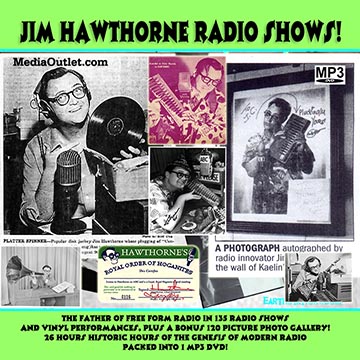
July 25: Carousel Day (National
Merry-Go-Round Day): -- A holiday was created by the National
Carousel Association (N.C.A.) as a way to mark the registration of
the first patent for a carousel design in 1871 by William
Schneider. However, carousels are not exactly a modern phenomenon,
as their existence has been traced to 500 A.D in the Byzantine
Empire where ancient drawings depict a fascinating carousel style.
The earliest-known carousel depiction is said to have originated
from the Byzantine Empire in 500 A.D. In the design, riders are
depicted sitting in baskets suspended from poles. The word
'carousel' derives from the Italian word 'garosello' and the
Spanish word 'carosella,' both of which mean 'little battle.' The
name references the sixth-century style of jousting in Europe and
Asia, where knights on horses would ride in a circle while
attempting to catch balls of perfume being thrown at them. In the
17th century, children began to play a mock version of this game
by riding on horses made of wood. Several people contributed to
the development of modern carousels. One of the most prominent was
Gustav Dentzel who emigrated from Germany to the United States and
revived his family's carousel business. He has been credited as
the first to include animal menagerie in his carousels, such as
lions, cats, tigers, and deer, apart from the traditional horses
and chariots. However, he did not file a patent for his carousel
designs and in 1871, William Schneider of Davenport, Ohio became
the first person to file a patent for a carousel. The creation of
Carousel Day or Merry-Go-Round Day is all thanks to Bette Largent,
President of the National Carousel Association (N.C.A.), and
Ronald Hopkins, a carousel historian. The holiday was created to
celebrate carousels and their joyful addition to society. On Sale
Until Midnight Tonight PT!
https://store.earthstation1.com/jim-hawthorne-radio-shows-mp3-dv3.html
Today's
EarthStation1.com 15% (Or More!) Off Commemorative Memorial Title:
The Wisdom Of The Dream: Carl Jung A Life Of Dreams DVD, Download,
USB
Today, July 25, 2026
July 25: Health And Happiness With
Hypnosis Day: -- Observed annually to raise awareness of the
benefits of hypnotherapy on health and happiness. Hypnosis is a
psychological state resembling sleep, where a person loses the
power of voluntary action and is highly responsive to suggestion
or direction. Hypnotherapy, or the use of hypnosis as a
therapeutic technique, is widely used to assist people in
overcoming bad habits and dealing with issues such as depression,
PTSD, weight loss, grief, conflicts, and sleep disorders. Hypnosis
is administered by trained hypnotherapists and psychologists.
Since the dawn of ancient Egypt and Greece, people have used
hypnosis to help them deal with problems. The earliest record of
hypnosis can be traced to 1027 when Avicenna (Ibn Sina) published
"The Book of Healing," a book on sleep and hypnosis.
Around 1770, Austrian physician Franz Mesmer developed the animal
magnetism theory, also known as 'mesmerism.' Mesmer used this
hypnotic technique to treat patients in Vienna and Paris, but he
was quickly discredited by other scientists due to a lack of
concrete scientific evidence for his work. Many clinicians of his
time, however, continued to use 'mesmerism.' James Braid, a
Scottish ophthalmologist, coined the term 'hypnosis' in 1842,
which originated from the Greek word for 'sleep.' This term first
appeared in his unpublished "Practical Essay on the Curative
Agency of Neuro-Hypnotism." Braid developed a psychological
and physiological basis for the effects of mesmerism while
opposing the Mesmerists' views. Braid was later recognized as the
first true hypnotist. Several physicians became interested in
hypnosis in the mid-nineteenth century. That includes Jean-Martin
Charcot (who advocated for hypnosis to treat hysteria),
Ambroise-Auguste Liebeualt, Hippolyte Bernheim, and Josef Breuer.
During a visit to France in the 1880s, Austrian physician Sigmund
Freud took notice of hypnosis for the treatment of neurotic
disorders and decided to adopt the technique back home in Vienna.
However, he encountered challenges hypnotizing some patients and
chose to discard hypnosis in favor of free association. The First
International Congress for Experimental and Therapeutic Hypnotism
was held in Paris, France in 1889, followed by the Second
International Congress for Experimental and Therapeutic Hypnotism
from August 12 to August 19, 1900. In 1892, the British Medical
Association endorsed hypnosis in therapy and rejected the
Mesmerism theory. In the late 20th century, the American
Psychological Association created the Division 30 Society of
Psychological Hypnosis. Today, hypnotherapy is employed to treat
medical and behavioral issues. On Sale Until Midnight Tonight PT!
https://store.earthstation1.com/the-wisdom-of-the-dream-carl-jung--a-life-of-dreams-dvd.html
Today's
EarthStation1.com 15% (Or More!) Off Commemorative Memorial Title:
G.I. Joe: America's WWII Soldiers w/Dwight Eisenhower DVD, MP4,
USB
Today, July 25, 2026
July 25: National Hire A Veteran Day: --
Get ready for a very special hiring celebration! Each year, brave
men and women from the military service return to civilian life.
This day was created to remind job seekers and employers alike
that these veterans' experience and dedication can breathe new
life into the workforce. It aims to teach people about the value
of hiring a veteran. The word 'veteran' itself means 'old' - from
the Latin root word 'vetus.' Across the globe, this word is used
to refer to someone who has had a long career in any particular
occupation or field. The U.S. primarily uses this word to describe
someone who has been discharged from the armed forces. As long as
there have been wars, there have been veterans. This military
personnel has been honored across the ages by various famous
figures - near the end of the Second American Civil War, President
Abraham Lincoln famously called for the good treatment of
veterans. This war also produced some veterans organizations like
the Grand Army of the Republic and the United Confederate
Veterans. The treatment of veterans changed after World War I.
Discontented vets took up arms and protested the way were being
treated. One of the most important protest movements took place
during the Great Depression, in which the Bonus Army of unemployed
veterans marched on Washington, D.C., hoping to get the bonus that
Congress had promised them for years in the future. The Second
World War brought some changes to the treatment of veterans,
partly due to the experience with the First World War veterans.
Most participating states in the war, including the U.S., set up
elaborate veterans' administrations. Established veterans' groups
like the American Legion and Veterans of Foreign Wars pushed for
the Servicemen's Readjustment Act of 1944, commonly known as the
G.I. Bill. This was a law that provided benefits for some of the
returning World War II veterans (who were commonly referred to as
G.I.s). While the original G.I. Bill expired in 1956, this term is
still used to refer to programs created to assist some of the U.S.
military veterans. Marine Corps veteran Dan Caporale, also the
founder of the national non-profit Hire Our Heroes, spent many
years working to employ veterans. In an interview, Caporale
mentions how he wondered what would happen if there were a special
day designated for hiring veterans. This question led to him
creating an online career fair to connect veterans with
prospective employers. From there, the idea of a special day took
flight, and National Hire a Veteran Day finally began being
observed around the country. In 2017, President Donald Trump
signed the Honoring Investments in Recruiting and Employing
American Military Veterans Act (HIRE Vets Act) and a special HIRE
Vets Medallion Program was also created to award those employers
who demonstrated an outstanding commitment to hiring and retaining
veterans. This Act further supported National Hire a Veteran Day.
On Sale Until Midnight Tonight PT!
https://store.earthstation1.com/perspective-on-greatness-gi-joe-dvd.html
Today's
EarthStation1.com 15% (Or More!) Off Commemorative Memorial Title:
The Adventurer (1917) + The Bond (1918) Charlie Chaplin DVD, MP4,
USB
Today, July 25, 2026
July 25: World Drowning Prevention
Day/National Drowning Prevention Day: -- A means of raising
awareness of the catastrophic and long-term effects of drowning on
families and communities, as well as life-saving ways to prevent
it. Every year, an estimated 236,000 individuals drown, and it is
one of the top ten fatalities of kids aged five to 14.
Toxicological studies show that children and adolescents from
rural areas are more likely than urban dwellers to drown. World
Drowning Prevention Day, established in April 2021 by the United
Nations General Assembly Resolution 'Global drowning prevention'
is observed in July every year. This global advocacy event
provides an opportunity to highlight the devastating and profound
impact that drowning has on families and communities, as well as
to propose life-saving measures to help prevent it from happening
again. An estimated 236,000 people drown each year, making
drowning one of the top ten leading causes of death among children
and adolescents aged one to 24 years. Drowning disproportionately
affects children and adolescents in rural areas, with more than
90% of drowning deaths occurring in rivers, lakes, springs, wells,
and home water storage vessels in low- and middle-income nations.
World Drowning Day's objectives include providing safe places away
from water, such as childcare centers for pre-school children with
capable childcare, teaching swimming, water safety, secured
lifesaving skills, coaching bystanders in safe rescue and
resuscitation, establishing and implementing safe boating,
shipping, and ferry regulations, and improving flood risk
management. According to a recent U.N. General Assembly decision,
the World Health Organization (WHO) has been requested to
coordinate drowning prevention efforts across the whole United
Nations system. WHO fulfills this role by planning a global launch
event, generating relevant advocacy materials, and promoting
national and local actions in nations and communities worldwide.
It supports individuals and organizations in understanding the
global context of drowning and drowning prevention, as well as in
using the advocacy materials created for the event to improve what
they are doing and inspire others in their networks to do the
same. On Sale Until Midnight Tonight PT!
https://store.earthstation1.com/the-adventurer-dvd-1917-chaplin-special-edition-plus-the-1917.html
Today's
EarthStation1.com 15% (Or More!) Off Commemorative Memorial Title:
America: The Second Century Documentary Series DVD, Download, USB
Today, July 25, 2026
July 25, 1952: Constitution Day (Puerto
Rico): -- The Constitution Of The Commonwealth Of Puerto Rico: The
U.S. non-incorporated territory of Puerto Rico adopts its
constitution, the controlling government document of Puerto Rico.
It is composed of nine articles detailing the structure of the
government as well as the function of several of its institutions.
The document also contains an extensive and specific bill of
rights. It was ratified by Puerto Rico's electorate in a
referendum on March 3, 1952, and on July 25, 1952, Governor Luis
Munoz Marin proclaimed that the constitution was in effect. July
25 is known as Constitution Day. The United States maintains
ultimate sovereignty over Puerto Rico. Under this Constitution,
Puerto Rico officially identifies as the Commonwealth of Puerto
Rico. In 1950, the U.S. Congress granted Puerto Ricans the right
to organize a constitutional convention via a referendum that gave
them the option of voting their preference, "yes" or
"no", on a proposed U.S. law that would organize Puerto
Rico as a "commonwealth" that would continue United
States sovereignty over Puerto Rico and its people. Puerto Rico's
electorate expressed its support for this measure in 1951 with a
second referendum to ratify the constitution. The Constitution of
Puerto Rico was formally adopted on July 3, 1952. The
Constitutional Convention specified the name by which the body
politic would be known. On February 4, 1952, the convention
approved Resolution 22 which chose in English the word
Commonwealth, meaning a "politically organized community"
or "state", which is simultaneously connected by a
compact or treaty to another political system. Puerto Rico
officially designates itself with the term "Commonwealth of
Puerto Rico" in its constitution, as a translation into
English of the term to "Estado Libre Asociado". On Sale
Until Midnight Tonight PT!
https://store.earthstation1.com/america-the-second-century-us-2nd-100-years-history-621006.html
Today's
EarthStation1.com 15% (Or More!) Off Commemorative Memorial Title:
Spanish-American War & Cuban War Of Independence DVD,
Download, USB
Today, July 25, 2026
July 25, 1898: The Decolonization Of The
Americas: The Cuban War Of Independence (The Necessary War): The
Spanish-American War: The Puerto Rico Campaign: -- The American
invasion of the Spanish colony Puerto Rico begins as United States
Army troops under General Nelson A. Miles land and secure the port
at Guanica, beginning the land offensive portion of The Puerto
Rico campaign, the American military sea and land operation on the
island of Puerto Rico during the Spanish-American War. The
offensive began with a naval offensive on May 12, 1898, when the
United States Navy attacked the capital, San Juan. Though the
damage inflicted on the city was minimal, the Americans were able
to establish a blockade in the city's harbor, San Juan Bay. On
June 22, the cruiser Isabel II and the destroyer Terror delivered
a Spanish counterattack, but were unable to break the blockade and
the Terror was damaged. The land offensive began on July 25, when
1,300 infantry soldiers led by Major General Nelson A. Miles
disembarked off the coast of Guanica. After controlling the first
skirmish, the Americans advanced to Coamo, where they engaged
Puerto Rican and Spanish troops in battle. The battle concluded
when the allied soldiers retreated after the battle left two dead
on their side, and four on the American side. The United States
was able to seize control of Fajardo on August 1, but was forced
to withdraw on August 5 after a group of 200 Puerto Rican-Spanish
soldiers led by Pedro del Pino gained control of the city, while
most civilian inhabitants fled to a nearby lighthouse. The
Americans encountered larger opposition as they advanced towards
the main island's interior. They engaged in two crossfires in
Guamani River and Coamo, both of which were inconclusive as the
allied soldiers retreated. A battle in San German concluded in a
similar fashion with the Spanish retreating to Lares. On August 9,
1898, American troops that were pursuing units retreating from
Coamo encountered heavy resistance in Aibonito and retreated after
six of their soldiers were injured. They returned three days
later, reinforced with artillery units and attempted a surprise
attack. In the subsequent crossfire, confused soldiers reported
seeing Spanish reinforcements nearby and five American officers
were gravely injured, which prompted a retreat order. All military
actions in Puerto Rico were suspended on August 13, after U.S.
President William McKinley and French Ambassador Jules Cambon,
acting on behalf of the Spanish government, signed an armistice
whereby Spain relinquished its sovereignty over the territories of
Puerto Rico, Cuba, the Philippines and Guam. In 1917, Puerto
Ricans became American citizens and Puerto Rico became an
unincorporated territory of the U.S.. Partial self-government was
granted in 1947 allowing citizens to elect their own governor. On
Sale Until Midnight Tonight PT!
https://store.earthstation1.com/spanishamerican-war-films-dvd.html
Today's
EarthStation1.com 15% (Or More!) Off Commemorative Memorial Title:
Frontiers Of Flight Aviation History TV Series DVD, MP4, USB Drive
Today, July 25, 2026
July 25, 1909: Aviation: The History Of
Aviation: The History Of Overseas Aviation: -- The world's first
international overseas airplane flight is achieved by Louis
Bleriot when he flies across the English Channel in a small
monoplane heavier-than-air machine from Calais, France to Dover,
England in 37 minutes, thereby winning the Daily Mail 1,000 Pound
Sterling prize for achieving the feat. After asking, "Where
is England?" he took off from France, flew over the English
Channel and landed in England near Dover, where he was greeted by
British police. Between 1907 and 1925, the Daily Mail newspaper,
initially on the initiative of its proprietor, Alfred Harmsworth,
1st Viscount Northcliffe, awarded numerous prizes for achievements
in aviation. The newspaper would stipulate the amount of a prize
for the first aviators to perform a particular task in aviation,
or to the winner of an aviation race or event. The most famous
prizes were a 1,000 Pounds Sterling award for the first
cross-channel flight, given to Louis Bleriot in 1909, and a 10,000
Pounds Sterling award, given in 1919 to Alcock and Brown for the
first non-stop transatlantic flight between North America and
Ireland. The prizes are credited with advancing the course of
aviation during the early years, with the considerable sums
offered becoming a much-coveted goal for the field's pioneers. The
Daily Mail prize for crossing the English Channel was first
announced in October 1908, with a prize of 500 Pounds Sterling
being offered for a flight made before the end of the year. When
1908 passed with no serious attempt being made, the prize money
was doubled to 1,000 Pounds Sterling and the offer extended to the
end of 1909. Like some of the other prizes offered by the paper,
it was widely seen as nothing more than a way to gain cheap
publicity: the Paris newspaper Le Matin commenting that there was
no chance of the prize being won. The English Channel had been
crossed by an unmanned hydrogen balloon in 1784 and a manned
crossing by Jean-Pierre Blanchard and John Jeffries followed in
1785. Bleriot, who intended to fly across the Channel in his Type
XI monoplane, had three rivals for the prize, the most serious
being Hubert Latham, a French national of English extraction
flying an Antoinette IV monoplane. He was favoured by both the
United Kingdom and France to win. The others were Charles de
Lambert, a Russian aristocrat with French ancestry, and one of
Wilbur Wright's pupils, and Arthur Seymour, an Englishman who
reputedly owned a Voisin biplane. De Lambert got as far as
establishing a base at Wissant, near Calais, but Seymour did
nothing beyond submitting his entry to the Daily Mail. Lord
Northcliffe, who had befriended Wilbur Wright during his
sensational 1908 public demonstrations in France, had offered the
prize hoping that Wilbur would win. Wilbur wanted to make an
attempt and cabled brother Orville in the USA. Orville, then
recuperating from serious injuries sustained in a crash, replied
telling him not to make the Channel attempt until he could come to
France and assist. Also Wilbur had already amassed a fortune in
prize money for altitude and duration flights and had secured
sales contracts for the Wright Flyer with the French, Italians,
British and Germans; his tour in Europe was essentially complete
by the summer of 1909. Both brothers saw the Channel reward of
only a thousand pounds as insignificant considering the dangers of
the flight. Latham arrived in Calais in early July, and set up his
base at Sangatte in the semi-derelict buildings which had been
constructed for an early attempt to dig a tunnel under the
Channel. The event was the subject of great public interest; it
was reported that there were 10,000 visitors at Calais and a
similar crowd at Dover. The Marconi Company set up a special radio
link for the occasion, with one station on Cap Blanc Nez at
Sangatte and the other on the roof of the Lord Warden Hotel in
Dover. The crowds were in for a wait: the weather was windy, and
Latham did not make an attempt until 19 July, but 6 miles (9.7 km)
from his destination his aircraft developed engine trouble and was
forced to make the world's first landing of an aircraft on the
sea. Latham was rescued by the French destroyer Harpon and taken
back to France, where he was met by the news that Bleriot had
entered the competition. Bleriot, accompanied by two mechanics and
his friend Alfred Leblanc, arrived in Calais on Wednesday 21 July
and set up their base at a farm near the beach at Les Baraques,
between Calais and Sangatte. The following day a replacement
aircraft for Latham was delivered from the Antoinette factory. The
wind was too strong for an attempted crossing on Friday and
Saturday, but on Saturday evening it began to drop, raising hopes
in both camps. Leblanc went to bed at around midnight but was too
keyed up to sleep well; at two o'clock, he was up, and judging
that the weather was ideal woke Bleriot who, unusually, was
pessimistic and had to be persuaded to eat breakfast. His spirits
revived, however, and by half past three, his wife Alice had been
put on board the destroyer Escopette, which was to escort the
flight. At 4:15 am on the 25 July 1909, watched by an excited
crowd, Bleriot made a short trial flight in his Type XI, and then,
on a signal that the sun had risen (the competition rules required
a flight between sunrise and sunset), he took off at 4:41 for the
attempted crossing.] Flying at approximately 45 mph (72 km/h) and
an altitude of about 250 ft (76 m), he set off across the Channel.
Not having a compass, Bleriot took his course from the Escopette,
which was heading for Dover, but he soon overtook the ship. The
visibility deteriorated, and he later said, "for more than 10
minutes I was alone, isolated, lost in the midst of the immense
sea, and I did not see anything on the horizon or a single ship".
The grey line of the English coast, however, came into sight on
his left; the wind had increased, and had blown him to the east of
his intended course. Altering course, he followed the line of the
coast about a mile offshore until he spotted Charles Fontaine, the
correspondent from Le Matin waving a large Tricolour as a signal.
Unlike Latham, Bleriot had not visited Dover to find a suitable
spot to land, and the choice had been made by Fontaine, who had
selected a patch of gently sloping land called Northfall Meadow,
close to Dover Castle, where there was a low point in the cliffs.
Once over land, he circled twice to lose height, and cut his
engine at an altitude of about 20 m (66 ft), making a heavy
"pancake" landing due to the gusty wind conditions; the
undercarriage was damaged and one blade of the propeller was
shattered, but Bleriot was unhurt. The flight had taken 36 minutes
and 30 seconds. News of his departure had been sent by radio to
Dover, but it was generally expected that he would attempt to land
on the beach to the west of the town. The Daily Mail
correspondent, realising that Bleriot had landed near the castle,
set off at speed in a motor car and took Bleriot to the harbour,
where he was reunited with his wife. The couple, surrounded by a
cheering crowd and photographers, were then taken to the Lord
Warden Hotel at the foot of the Admiralty Pier; Bleriot had become
a celebrity. The Bleriot Memorial, the outline of the aircraft
laid out in granite setts in the turf (funded by oil manufacturer
Alexander Duckham), marks his landing spot above the cliffs near
Dover Castle. The aircraft which was used in the crossing is now
preserved in the Musee des Arts et Metiers in Paris. On Sale Until
Midnight Tonight PT!
https://store.earthstation1.com/frontiers-of-flight-aviation-history-tv-series-dvd-mp4-download-us4.html
Today's
EarthStation1.com 15% (Or More!) Off Commemorative Memorial Title:
Manfred von Richthofen The Red Baron & WWI Aviation DVD,
Download, USB
Today, July 25, 2026
July 25, 1915: The European Civil War:
World War I: The First European War (The European Theater Of World
War I): The Western Front Of World War I: Aviation: Military
Aviation: Air Warfare Of World War I: Awards And Decorations:
Military Awards And Decorations: Awards And Decorations Of The
British Armed Forces: Highest Military Awards For Gallantry:
Highest Military Awards For Gallantry Of The British Armed Forces:
The Victoria Cross (VC): -- British Army Royal Flying Corps
Captain Lanoe Hawker becomes the first British pursuit aviator
(fighter pilot) to earn the Victoria Cross. Lanoe George Hawker,
VC, DSO (December 30, 1890 - November 23, 1916) was a British
flying ace of the First World War. Having seven credited
victories, he was the third military pilot (and the first fighter
pilot) to receive the Victoria Cross, the highest decoration for
gallantry awarded to British and Commonwealth servicemen. He was
killed in a dogfight with the famous German flying ace Manfred von
Richthofen ("The Red Baron"), who described him as "the
British Boelcke". On Sale Until Midnight Tonight PT!
https://store.earthstation1.com/red-baron-dvd-world-war-i-aerial-warfare-documentaries.html
Today's
EarthStation1.com 15% (Or More!) Off Commemorative Memorial Title:
The Berlin Wall w/Mike Wallace JFK Ich Bin Ein Berliner & More
MP4 DVD
Today, July 25, 2026
July 25, 1961: The Aftermath Of World War
II: The Cold War: The Cold War (1953-1962): Addresses To The
Nation: Oval Office Addresses: The Oval Office Addresses Of John
F. Kennedy: The Berlin Crisis Of 1961: -- As the confrontation
over Berlin between the US and USSR escalates, President John F.
Kennedy delivers a live tv Oval Office Address to the nation,
emphasizing that any attack on Berlin is an attack on NATO.
Kennedy delivered the speech on ABC television in Washington, and
was broadcast nationwide in the US, where he reiterated that the
United States was not looking for a fight and that he recognised
the "Soviet Union's historical concerns about their security
in central and eastern Europe." He said he was willing to
renew talks about the matter (which the Soviets had previously
brought up at the Vienna Summit of June 4th), but he also
announced that he would ask Congress for an additional 3.25B USD
for military spending, mostly on conventional weapons. He wanted
six new divisions for the Army and two for the Marines, and he
announced plans to triple the draft and to call up the reserves.
Kennedy proclaimed: "We seek peace, but we shall not
surrender." The same day, 25 July, Kennedy requested an
increase in the Army's strength from 875,000 to approximately 1
million, an increase of 29,000 and 63,000 men in the active duty
Navy and Air Force, respectively, and the authority to bring some
reserve units into active duty. He also ordered that draft calls
be doubled, and asked for additional funds to identify and mark
space in existing structures that could be used for fallout
shelters, to stock these shelters with essentials for survival,
and to improve air-raid warning and fallout detection systems.
Vacationing in the Black Sea resort of Sochi, Khrushchev was
reported to be angered by Kennedy's speech. John Jay McCloy,
Kennedy's disarmament adviser, who happened to be in the Soviet
Union, was invited to join Khrushchev. It is reported that
Khrushchev explained to McCloy that Kennedy's military build-up
threatened war. The Berlin Crisis began at the Vienna Summit on 4
June 1961, when while meeting with US President John F. Kennedy,
Premier Khrushchev reissued the Soviet ultimatum to sign a
separate peace treaty with East Germany, and thus end the existing
four-power agreements guaranteeing American, British, and French
rights to access West Berlin and the occupation of East Berlin by
Soviet forces. However, this time he did so by issuing a firm
deadline, 31 December 1961. The three powers responded that any
unilateral treaty could not affect their responsibilities and
rights in West Berlin. On Sale Until Midnight Tonight PT!
https://store.earthstation1.com/the-berlin-wall-documentary-mike-wallace-dvd-mp4-download-usb-driv4.html
Today's
EarthStation1.com 15% (Or More!) Off Commemorative Memorial Title:
Outer Space Films 9: Mars Probes DVD, Video Download, USB Flash
Drive
Today, July 25, 2026
July 25, 1976: The History Of
Spaceflight: The Aftermath Of World War II: The Cold War: The
Space Age: The Space Race: The Discovery And Exploration Of The
Solar System: Space Probes: Interplanetary Space Probes: The
United States Space Program: Spacecraft Missions To Mars: The
Viking Program: Viking 1: The Face On Mars: -- Viking 1, planetary
probe that was the first spacecraft to land successfully on Mars
and perform its mission, record holder for the longest Mars
surface mission of 2307 days (over 6.25 years) or 2245 sols until
that record was broken by Opportunity on May 19, 2010, takes the
first and most famous "Face On Mars" photo. The Face On
Mars appears in the Cydonia Region of the Planet Mars, located in
the planet's northern hemisphere in a transitional zone between
the heavily cratered regions to the south and relatively smooth
plains to the north. Some planetologists believe that the northern
plains may once have been ocean beds, and that Cydonia may once
have been a coastal zone. Cydonia was first imaged in detail by
the Viking 1 and Viking 2 orbiters. Eighteen images of the Cydonia
region were taken by the orbiters, of which seven have resolutions
better than 250 m/pixel (820 ft/pixel). The other eleven images
have resolutions that are less than 550 m/pixel (1800 ft/pixel)
and are of limited use for studying surface features. In image
035A72 taken by Viking 1 on July 25, 1976, a two-kilometre-long
(1.2 mi) Cydonian mesa, situated at 40.75 dgs north latitude and
9.46 dgs west longitude, had the appearance of a humanoid face.
When the image was originally acquired, Viking chief scientist
Gerald Soffen dismissed the "Face on Mars" as a "trick
of light and shadow". A second image, 070A13, also shows the
"face", and was acquired 35 Viking orbits later
(1,654.10 hours/69.92 days later) at a different sun-angle from
the 035A72 image. Since it was originally first imaged, the face
has been accepted by scientists as an optical illusion, an example
of the psychological phenomenon of pareidolia, the tendency for
perception to impose a meaningful interpretation on a stimulus,
usually visual, in which one detects an object, pattern, or
meaning where there is none. Similar optical illusions can be
found in the geology of Earth; examples include the Old Man of the
Mountain, the Romanian Sphinx, Giewont, the Pedra da Gavea, the
Old Man of Hoy, Stac Levenish, Sleeping Ute, and the Badlands
Guardian. The Face On Mars inspired individuals and organizations
interested in extraterrestrial intelligence and visitations to
Earth, and the images were published in this context in 1977. Some
commentators, most notably Richard C. Hoagland, believe the "Face
on Mars" to be evidence of a long-lost Martian civilization
along with other features they believe are present on in the
Cydonia Region, such as apparent pyramids, which they argue are
part of a ruined city. While accepting The Face On Mars as a
subject for scientific study, astronomer Carl Sagan criticized
much of the speculation concerning it in the chapter "The Man
In The Moon And The Face On Mars" in his 1995 book The
Demon-Haunted World. The shape-from-shading work by Mark J.
Carlotto was used by Sagan in a chapter of his famous Cosmos
series. In 1998, a news article about the "Space Face"
quoted a scientist talking about deciphering "intelligent
design" in nature. A cutting of this was used by Charles
Thaxton as an overhead visual for a lecture at Princeton, in his
first public use of the term "intelligent design" as a
substitute for creation science. The Face On Mars is also a common
topic among skeptic groups, who use it as an example of credulity.
They point out that there are other faces on Mars but these do not
elicit the same level of study; one such well known example is the
Galle Crater, which takes the form of a smiley. Viking 1 was
launched by NASA on August 20, 1975 atop a Titan III-Centaur
rocket launch vehicle from Cape Canaveral Air Force Station Space
Launch Complex 41 at 21:22 UTC. Viking 1 was the first of two
spacecraft (along with Viking 2) sent to Mars as part of NASA's
Viking program. On July 20, 1976, the Viking 1 lander became the
first spacecraft to land successfully on Mars and perform its
mission. It was the second spacecraft to soft-land on Mars; the
first spacecraft to do so was the Soviet Union's Mars 3 on
December 2, 1971, but it stopped transmitting after 14.5 seconds.
Viking 1 held the record for the longest Mars surface mission of
2307 days (over 6 1/4 years) or 2245 Martian solar days, until
that record was broken by the Opportunity rover on May 19, 2010.
Viking 1 was the first of two spacecraft, along with Viking 2,
each consisting of an orbiter and a lander, sent to Mars as part
of NASA's Viking program. The orbiter's primary mission ended at
the beginning of solar conjunction on November 5, 1976; its
operations were terminated on August 17, 1980, after 1,485 orbits.
The Viking program consisted of a pair of American space probes
sent to Mars, Viking 1 and Viking 2. Each spacecraft was composed
of two main parts: an orbiter designed to photograph the surface
of Mars from orbit, and a lander designed to study the planet from
the surface. The orbiters also served as communication relays for
the landers once they touched down. The Viking program grew from
NASA's earlier, even more ambitious, Voyager Mars program, which
was not related to the successful Voyager deep space probes of the
late 1970s. Viking 1's sister craft, Viking 2, was launched on
September 9, 1975, both riding atop Titan III-E rockets with
Centaur upper stages. Viking 1 entered Mars orbit on June 19,
1976, with Viking 2 following suit on August 7. After orbiting
Mars for more than a month and returning images used for landing
site selection, the orbiters and landers detached; the landers
then entered the Martian atmosphere and soft-landed at the sites
that had been chosen. The Viking 1 lander touched down on the
surface of Mars on July 20, 1976, and was joined by the Viking 2
lander on September 3. The orbiters continued imaging and
performing other scientific operations from orbit while the
landers deployed instruments on the surface. The Viking Program
cost roughly 1 billion USD in 1970s dollars, equivalent to about 5
billion USD in 2016 dollars. The mission was considered successful
and is credited with helping to form most of the body of knowledge
about Mars through the late 1990s and early 2000s. On Sale Until
Midnight Tonight PT!
https://store.earthstation1.com/outer-space-films-9-mars-space-probe-projects-viking-amp-mariner-dv9.html
Today's
EarthStation1.com 15% (Or More!) Off Commemorative Memorial Title:
The American Adventure: TV History Series 1607-1876 DVD MP4 USB
Drive
Today, July 25, 2026
July 25, 1755: The Anglo-French Wars
(1109-1815): The Second Hundred Years' War (1689-1815): The Sixty
Years' War (French: Guerre De Soixante Ans) (1754-1815): The Seven
Years' War (1756-1763): The French And Indian War (1754-1763): The
Battle Of Fort Beausejour: Crimes Against Humanity: Forced
Migrations (Forced Relocations, Forced Displacements): The
Expulsion Of The Acadians (1755-1764) (The Great Upheaval, The
Great Expulsion, The Great Deportation, Le Grand Derangement): --
Following the French surrender of Fort Beausejour to the British
on June 16, 1755 during The Battle Of Fort Beausejour, British
governor Charles Lawrence and the Nova Scotia Council, in one of
the most fateful decision in North American history generally and
ultimately in American history particularly, order the deportation
of the Acadians from the present day Canadian Maritime provinces
of Nova Scotia, New Brunswick and Prince Edward Island -- parts of
an area also known as Acadia, a colony of New France; after the
passage of centuries, a significant number of their their
descendants would best be known to Americans as Cajuns, and their
greatest concentration in America would be in the city of New
Orleans, Louisiana, home of the birth of Jazz and the modern
musical styles that eventually developed from it, ultimately
spreading throughout America and worldwide in its popularity and
influence on popular culture. The British first deported Acadians
to the Thirteen Colonies, and after 1758 transported additional
Acadians to Britain and France. In all, of the 14,100 Acadians in
the region, approximately 11,500 Acadians were deported (a census
of 1764 indicates that 2,600 Acadians remained in the colony,
presumably having eluded capture. During the War of the Spanish
Succession, the British captured Port Royal, the capital of the
colony, in a siege. The 1713 Treaty of Utrecht, which concluded
the conflict, ceded the colony to Great Britain while allowing the
Acadians to keep their lands. Over the next forty-five years,
however, the Acadians refused to sign an unconditional oath of
allegiance to Britain. During the same period, some also
participated in various military operations against the British,
and maintained supply lines to the French fortresses of Louisbourg
and Fort Beausejour. As a result, the British sought to eliminate
any future military threat posed by the Acadians and to
permanently cut the supply lines they provided to Louisbourg by
removing them from the area. Without making distinctions between
the Acadians who had been neutral and those who had resisted the
occupation of Acadia, the British governor Charles Lawrence and
the Nova Scotia Council ordered them to be expelled. In the first
wave of the expulsion, Acadians were deported to other British
colonies. During the second wave, they were deported to Britain
and France, from where they migrated to Louisiana. Acadians fled
initially to Francophone colonies such as Canada, the uncolonized
northern part of Acadia, Isle Saint-Jean (present-day Prince
Edward Island) and Isle Royale (present-day Cape Breton Island).
During the second wave of the expulsion, these Acadians were
either imprisoned or deported. Throughout the expulsion, Acadians
and the Wabanaki Confederacy continued a guerrilla war against the
British in response to British aggression which had been
continuous since 1744 (see King George's War and Father Le
Loutre's War). Along with the British achieving their military
goals of defeating Louisbourg and weakening the Mi'kmaq and
Acadian militias, the result of the Expulsion was the devastation
of both a primarily civilian population and the economy of the
region. Thousands of Acadians died in the expulsions, mainly from
diseases and drowning when ships were lost. On July 11, 1764, the
British government passed an order-in-council to permit Acadians
to legally return to British territories, provided that they take
an unqualified oath of allegiance. The American poet Henry
Wadsworth Longfellow memorialized the historic event in his poem
about the plight of the fictional character Evangeline, which was
popular and made the expulsion well known. According to Acadian
historian Maurice Basque, the story of Evangeline continues to
influence historic accounts of the deportation, emphasising
neutral Acadians and de-emphasising those who resisted the British
Empire. The Acadians (French: Acadiens) are the descendants of
French colonists who settled in Acadia during the 17th and 18th
centuries, some of whom are also descended from the Indigenous
peoples of the region. The colony was located in what is now
Eastern Canada's Maritime provinces (Nova Scotia, New Brunswick,
and Prince Edward Island), as well as part of Quebec, and
present-day Maine to the Kennebec River. Although today most of
the Acadians and Quebecois are French-speaking (francophone)
Canadians, Acadia was a distinctly separate colony of New France.
It was geographically and administratively separate from the
French colony of Canada (modern-day Quebec). As a result, the
Acadians and Quebecois developed two distinct histories and
cultures. They also developed a slightly different French
language. France has one official language and to accomplish this
they have an administration in charge of the language. Since the
Acadians were separated from this council, their French language
evolved independently, and Acadians retain several elements of
17th-century French that have been lost in France. The settlers
whose descendants became Acadians came from many areas in France,
but especially regions such as Ile-de-France, Normandy, Brittany,
Poitou and Aquitaine. Acadian family names have come from many
areas in France. For example, the Maillets are from Paris; the
LeBlancs of Normandy; the surname Melanson is from Brittany, and
those with the surnames Bastarache and Basque came from Aquitaine.
During the French And Indian War (the North American theater of
the Seven Years' War), British colonial officers suspected
Acadians were aligned with France after finding some Acadians
fighting alongside French troops at Fort Beausejour. Though most
Acadians remained neutral during the French And Indian War, the
British, together with New England legislators and militia,
carried out the Great Expulsion (Le Grand Derangement) of the
Acadians during the 1755-1764 period. They deported approximately
11,500 Acadians from the maritime region. Approximately one-third
perished from disease and drowning. The result was what one
historian described as an ethnic cleansing of the Acadians from
Maritime Canada. Other historians indicate that it was a
deportation similar to other deportations of the time period. Most
Acadians were deported to various American colonies, where many
were forced into servitude, or marginal lifestyles. Some Acadians
were deported to England, sent to the Caribbean, and some were
deported to France. After being expelled to France, many Acadians
were eventually recruited by the Spanish government to migrate to
present day Louisiana state (known then as Spanish colonial
Luisiana), where they developed what became known as Cajun
culture. In time, some Acadians returned to the Maritime provinces
of Canada, mainly to New Brunswick because they were barred by the
British from resettling their lands and villages in what became
Nova Scotia. Before the US Revolutionary War, the Crown settled
New England Planters in former Acadian communities and farmland as
well as Loyalists after the war (including nearly 3,000 Black
Loyalists, who were freed slaves). British policy was to
assimilate Acadians with the local populations where they
resettled. Acadians speak a dialect of French called Acadian
French. Many of those in the Moncton area speak Chiac and English.
The Louisiana Cajun descendants speak a dialect of American
English called Cajun English, with many also speaking Cajun
French, a close relative of the original dialect from Canada
influenced by Spanish and West African languages. On Sale Until
Midnight Tonight PT!
https://store.earthstation1.com/the-american-adventure-series-us-1st-century-4-dv14.html
Today's
EarthStation1.com 15% (Or More!) Off Commemorative Memorial Title:
World War I: The War Files TV Series DVD, Video Download, USB
Drive
Today, July 25, 2026
July 25 [N.S.; O.S. July 13], 1894:
#BOTD: Gavrilo Princip, Bosnian Serb revolutionary, member of
Young Bosnia, a Yugoslavist organization seeking an end to
Austro-Hungarian rule in Bosnia and Herzegovina, assassin of
Archduke Franz Ferdinand of Austria and his wife, Sophie, in
Sarajevo on June 28, 1914, initiating a chain of events that would
lead to outbreak of the First World War (d. April 28, 1918) is
#born into the poor Serbian Orthodox Christian farming family of
Petar and Marija (nee Micic) Princip in the remote hamlet of
Obljaj, near Bosansko Grahovo, Bosnia and Herzegovina,
Austria-Hungary (de jure Ottoman Empire), the second of his
parents' nine children, six of whom died in infancy. Princip's
mother wanted to name him after her late brother, Spiro, but he
was named Gavrilo at the insistence of a local Eastern Orthodox
priest, who claimed that naming the sickly infant after the
Archangel Gabriel would help him survive. The Princip family had
lived in northwestern Bosnia for many centuries. His ancestors
came from Grahovo, Niksic in Montenegro, emigrating in the early
1700s, members of the Jovicevic clan. Princip's parents, Petar and
Marija (nee Micic), were poor farmers who lived off the little
land that they owned, belonging to a class of Christian peasants
known as kmetovi (serfs), who were often oppressed by their Muslim
landlords. Petar, who insisted on "strict correctness",
never drank or swore and was ridiculed by his neighbours as a
result. In his youth, he fought in the Herzegovina Uprising
against the Ottoman Empire. Following the revolt, he returned to
being a farmer in the Grahovo valley, where he worked
approximately 4 acres (1.6 ha; 0.0063 sq mi) of land and was
forced to give a third of his income to his landlord. To
supplement his income and feed his family, he resorted to
transporting mail and passengers across the mountains between
northwestern Bosnia and Dalmatia. Despite his father's initial
opposition, as he needed a shepherd to guard his sheep, Princip
began attending primary school in 1903, aged nine. He overcame a
difficult first year and became very successful in his studies,
for which he was awarded a collection of Serbian epic poetry by
his headmaster. At the age of 13, Princip moved to Sarajevo, where
his elder brother Jovan intended to enroll him at Sarajevo's
Austro-Hungarian Military Academy. However, by the time Princip
reached Sarajevo, Jovan had changed his mind after a shopkeeper
advised him not to make his younger brother "an executioner
of his own people". Princip was enrolled into the Merchants'
School instead. Jovan paid for his tuition with the money he
earned performing manual labour, carrying logs from the forests
surrounding Sarajevo to mills within the city. After three years
of study, Gavrilo transferred to the Sarajevo Gymnasium. Following
the annexation of the region by the Austro-Hungarian empire in
1908, Bosnia, like the other southern Slavic states under imperial
rule, yearned for independence. As a result, various student
groups emerged interested in movements such as romantic
nationalism, nihilism or anti imperialism, while at school and
through his roommate Danilo Ilic, Princip was also exposed to
socialist, anarchist and communist writing. Princip started to
associate with like-minded young nationalist revolutionaries and
came to admire Bogdan Zerajic, a Bosnian Serb who had attempted to
assassinate the Austro-Hungarian Governor of Bosnia and
Herzegovina, before taking his own life. Zerajic, who was from
Herzegovina like Princip, came to epitomize, in the eyes of many,
the ideal of self sacrifice. On the anniversary of his death, Serb
youths from Sarajevo started to visit his grave to lay flowers.
According to contemporary Italian historian Luigi Albertini, this
is where, after spending nights reflecting at the grave, that
Princip resolved to participate in his own attack. On June 28,
1914, Archduke Franz Ferdinand of Austria, heir presumptive to the
Austro-Hungarian throne, and his wife, Sophie, Duchess of
Hohenberg, arrived by train shortly before 10 a.m. in Sarajevo,
the provincial capital of Bosnia-Herzegovina, formally annexed by
Austria-Hungary in 1908. Their car was the third car of a six-car
motorcade heading towards Sarajevo Town Hall. The car's top was
rolled back to allow the crowds a good view of its occupants.
Princip and the five other conspirators lined the route. At 10:15
am, when the motorcade passed the central police station,
nineteen-year-old student Nedeljko Cabrinovic hurled a hand
grenade at the Archduke's car. The driver accelerated when he saw
the object flying towards him, and the bomb, which had a 10-second
delay, exploded under the fourth car. Two of the occupants were
seriously wounded. After Cabrinovic's failed attempt, the
motorcade sped away and Princip and the remaining conspirators
failed to act due to the motorcade's high speed. After the
Archduke gave his scheduled speech at Town Hall, he decided to
visit the victims of Cabrinovic's grenade attack at the Sarajevo
Hospital. To avoid the city centre, Governor of Bosnia and
Herzegovina General Oskar Potiorek decided that the royal car
should travel straight along the Appel Quay to the hospital.
However, Potiorek forgot to inform the driver, a Czech named
Leopold Lojka, about this decision. On the way to the hospital,
Lojka, following the original plan, turned onto a side street
where Princip was in front of a local delicatessen. After the
Governor shouted at him, Lojka stopped in front of a shop and
began to reverse. As he did so the engine stalled and the gears
locked. Princip stepped forward, drew a Browning semi-automatic
pistol, and at point-blank range fired twice into the car, first
hitting the Archduke in the neck, and then hitting the Duchess in
the abdomen. They both died shortly after. Princip and his
accomplices were arrested and implicated the Serbian nationalist
secret society known as the Black Hand, leading Austria-Hungary to
issue a demarche (a formal diplomatic representation) to Serbia
known as the July Ultimatum. Princip said the archduke was
targeted because 'as future Sovereign he would have prevented our
union by carrying through certain reforms', an allusion to the
archduke's reputed support for structural reforms of the monarchy
that would assign more autonomy to the Slavic lands. This was a
threat to the Serbian irredentist movement, a political and
popular movement to reclaim and occupy land the movement
considered "lost" from their nation's past. Princip was
a Yugoslav nationalist associated with the movement Mlada Bosna
(Young Bosnia) which predominantly consisted of Serbs, but also
Bosniaks and Croats. During his trial he stated: "I am a
Yugoslav nationalist, aiming for the unification of all Yugoslavs,
and I do not care what form of state, but it must be freed from
Austria... In my opinion every Serb, Croat and Slovene should be
an enemy of Austria." Princip was chained to a wall in
solitary confinement at the Small Fortress in Terezin, where he
lived in harsh conditions and developed tuberculosis. From
February to June 1916, Princip met four times with Martin
Pappenheim, a psychiatrist in the Austro-Hungarian army.
Pappenheim wrote that Princip asserted that the First World War
would have occurred even if the assassination had not taken place,
and that he "cannot feel himself responsible for the
catastrophe". Princip died after serving three years and ten
months incarcerated in his Theresienstadt Prison cell aged 23 in
the town of Terezin, Okres Litomerice District, Usti Nad Labem
Region, Bohemia (modern Czechia) from tuberculosis, weakened by
malnutrition and disease caused by poor prison conditions which
had already caused one of his arms to be amputated. He weighed
around 40 kgs (88 lbs) when he died. His remains were secretly
disposed. In 1914, a cenotaph was added to the side of the Serbian
Orthodox Chapel by the Serbian community located in St Mark
Cemetery in Sarajevo to honor Princip and his fellow conspirators
as heroes. His fellow assassins were executed in 1914 and their
remains were buried in unmarked graves. Supposedly, followers were
able to locate and identify the scattered unmarked graves in
Austria, disinter and gather some bones including his returning
them to Sarajevo. They were re-buried in St. Mark Cemetery in
Sarajevo in 1920 under a large gray granite marker as "Heroes
of Vidovdan." He is viewed by some as a national hero while
seen by others as a terrorist. A hundred years later in 2014, to
mark the day of the assassination, a bust of Princip was unveiled
in a ceremony, and a year later, a statue of him was unveiled in
Belgrade. Ironically, the prison where Princip was incarcerated
became a Nazi Concentration Camp during World War II. On Sale
Until Midnight Tonight PT!
https://store.earthstation1.com/world-war-i-the-war-files-dvd-2-part-documentary-serie2.html
Today's
EarthStation1.com 15% (Or More!) Off Commemorative Memorial Title:
Mein Kampf: A Blueprint For The Age Of Chaos 1960 DVD, MP4, USB
Drive
Today, July 25, 2026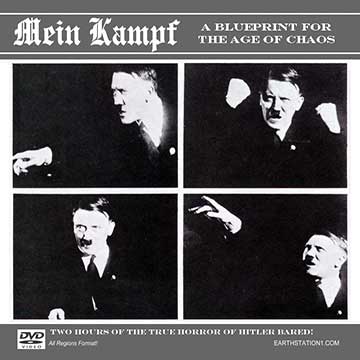
July 25, 1934: The Interwar Period (The
Interbellum, Between The Wars): The Road To War: Austrian Nazism
(Austrian National Socialism): Austrofascism (The Fatherland Front
[Austrian German: Vaterlandische Front, VF]): The July Putsch: The
Assassination Of Engelbert Dollfuss: -- #DOTD: Austrian Chancellor
Engelbert Dollfuss #dies when the Nazis assassinate him in a
failed coup attempt. Engelbert Dollfuss was an Austrian Christian
Social and Patriotic Front statesman. Having served as Minister
for Forests and Agriculture, he ascended to Federal Chancellor in
1932 in the midst of a crisis for the conservative government. In
early 1933, he shut down parliament, banned the Austrian Nazi
party and assumed dictatorial powers. Suppressing the Socialist
movement in February 1934, he cemented the rule of "austrofascism"
through the authoritarian First of May Constitution. On May 1,
1934, Dollfuss created a one-party state, to be led by the
Fatherland Front (German: Vaterlandische Front), with the
proclamation of the authoritarian "May Constitution".
The name of the country was changed from the "Republic of
Austria" to the "Federal State of Austria". The
flag, coat of arms and anthem were changed, too. Chancellor
Engelbert Dollfuss of the Christian Social Party took power in
Austria on May 20, 1932, and moved the party and Austria towards
dictatorship, centralization and fascism, in part because the
fascist Italy was its strongest international ally against
Germany. In March 1933, Dollfuss took advantage of an error in a
bill in parliament, and his cabinet voted to dissolve the National
Council and declared that parliament has ceased to function. In
May 1933 he created the Fatherland Front. While outwardly fascist,
it was mostly Catholic and influenced by the papal encyclical
Quadragesimo anno of 1931 which refuted liberalism and socialism,
capitalism and communism in favour of corporatism, which Pope Leo
XIII's 1880s commission called "system of social organization
that has at its base the grouping of men according to the
community of their natural interests and social functions, and as
true and proper organs of the state they direct and coordinate
labor and capital in matters of common interest". Corporatism
is related to the sociological concept of structural
functionalism. Corporatist ideas are common to ideologies
including absolutism, conservatism, fascism and liberalism.
Corporatism may also refer to economic tripartism involving
negotiations between business, labour and state interest groups to
establish economic policy. This is sometimes also referred to as
neo-corporatism and is associated with social democracy. According
to the Quadragesimo Anno issued by Pope Pius XI on 15 May 1931,
Tripartist corporatist social structure was one in which
government, industry, and labor work together in concert as part
of a third way between capitalism and communism. Corporatism was
widely adopted in the fascist nations of Catholic Europe,
including the regimes of Antonio de Oliveira Salazar in Portugal,
Benito Mussolini in Italy, Francisco Franco in Spain, and
Engelbert Dollfuss in Austria. The Communist left regarded the
encyclical as a partisan document, in which the Pope gave his
blessing to the Fascist regimes. Franklin D. Roosevelt also had
high praise for the encyclical and quoted it extensively on the
evils of concentrated economic power. Dollfuss was assassinated on
25 July 1934 by ten Austrian Nazis (Paul Hudl, Franz Holzweber,
Otto Planetta and others) of Regiment 89 who entered the
Chancellery building and shot him in an attempted coup d'etat, the
July Putsch. Mussolini had no hesitation in attributing the attack
to the German dictator: the news reached him at Cesena, where he
was examining the plans for a psychiatric hospital. The Duce
personally gave the announcement to the widow, who was a guest at
his villa in Riccione with children. He also put at the disposal
of Ernst Rudiger Starhemberg, who spent a holiday in Venice, a
plane that allowed the prince to rush back to Vienna and to face
the assailants with his militia, with the permission of President
Wilhelm Miklas. Mussolini also mobilized a part of the Italian
army on the Austrian border and threatened Hitler with war in the
event of a German invasion of Austria to thwart the putsch.
Dollfuss' successor, Kurt Schuschnigg, maintained the Austrian
regime until Adolf Hitler's annexation of Austria in 1938. On Sale
Until Midnight Tonight PT!
https://store.earthstation1.com/mein-kampf-1960-dvd-adolf-hitler-third-reich-holoc1960.html
Today's
EarthStation1.com 15% (Or More!) Off Commemorative Memorial Title:
Crusade In Europe WWII TV Series DVD, Video Download, USB Flash
Drive
Today, July 25, 2026
July 25, 1943: The European Civil War:
World War II: The Second European War (The European Theater Of
World War II): The Mediterranean And Middle East Theater Of World
War II: Italy: The History Of Italy: The History Of Fascist Italy
(Fascist Italy 1922-1943): The Grand Council Of Fascism (Italian:
Gran Consiglio Del Fascismo, "The Fascist Grand Council""):
The Fall Of The Fascist Regime In Italy: The Arrest Of Mussolini:
-- Benito Mussolini, just two weeks after the Allied attack on
Sicily, is forced out of office by the Grand Council of Fascism
and is replaced by Marshal Pietro Badoglio. The Fascist Grand
Council met for the first time since December of 1939 then took a
confidence vote resulting in Mussolini being ousted from office
and placed under arrest. King Victor Emmanuel of Italy then
ordered Marshal Pietro Badoglio to form a new government. Three
day's prior, on July 22, 1943, Allied forces captured the Italian
city of Palermo in Siciily. On 18 July, British General Harold
Alexander, General Eisenhower's second-in-command, ordered General
Patton, commander of the Western Task Force (Task Force 343)
consisting of the Seventh US Army, to capture Palermo as quickly
as possible in order to create a main supply base to maintain
further eastward commitment north of Mount Etna. On 21 July, the
Seventh Army's Provisional Corps overran the Italian battlegroup
Raggruppamento Schreiber (under General Ottorino Schreiber),
covering the withdrawal of the 15th Panzer Panzergrenadier
Division, but Patton lost 300 men killed and wounded in the
process. On 22 July, the Provisional Corps entered Palermo and the
next day the 45th Division cut the north coast road. Operation
Husky, code name for The Allied Invasion Of Italy, began on July
10, 1943 with an attack on the island of Sicily. The British entry
into Syracuse was the first Allied success in Europe. General
Dwight D. Eisenhower labeled the invasion "the first page in
the liberation of the European Continent.". The day before,
the commencement of the Allied invasion of Sicily caused the
downfall of Mussolini and forced Hitler to break off the Battle Of
Kursk. On July 5, 1943, an Allied invasion fleet secretly set sail
for Sicily, ultimately to commence Operation Husky. It was a major
campaign of World War II, in which the Allies took the island of
Sicily from the Axis powers (Italy and Nazi Germany). It began
with a large amphibious and airborne operation, followed by a
six-week land campaign, and initiated the Italian Campaign. Husky
began on the night of 9-10 July 1943, and ended on 17 August.
Strategically, Husky achieved the goals set out for it by Allied
planners; the Allies drove Axis air, land and naval forces from
the island and the Mediterranean sea lanes were opened for Allied
merchant ships for the first time since 1941. The Italian leader,
Benito Mussolini, was toppled from power in Italy and the way was
opened for the Allied invasion of Italy. The German leader, Adolf
Hitler, canceled a major offensive at Kursk after only a week, in
part to divert forces to Italy, resulting in a reduction of German
strength on the Eastern Front. The Allies had foreknowledge of the
German intentions regarding Kursk, provided in part by the British
intelligence service's overall intelligence gatherings and their
cryptanalysis of intercepted Lorenz cipher German Army
communications, known as Tunny Intercepts. Aware thereby months in
advance that an attack would fall on the neck of the Kursk
salient, the Allies concluded that an invasion of Sicily, and the
collapse of Italy that might potentionally result, timed to occur
at the same time that the Germans planned to launch the Battle Of
Kursk would require German troops to be diverted from the battle
to replace the Italians in Italy and to a lesser extent the
Balkans. Accordingly, Adolf Hitler was forced to have troops
training in France to be a strategic reserve for the Eastern Front
diverted to meet the Allied threat in the Mediterranean, and one
fifth of the entire German army was diverted from the east to
southern Europe, a proportion that would remain until near the end
of the war. Germany's extensive losses of men and tanks in the
Battle Of Kursk ensured that the victorious Soviet Red Army
enjoyed the strategic initiative for the remainder of the war. On
Sale Until Midnight Tonight PT!
https://store.earthstation1.com/crusade-in-europe-2-dual-layer-dvds-tv-series-eisenhowe2.html
Today's
EarthStation1.com 15% (Or More!) Off Commemorative Memorial Title:
Philby Burgess & Maclean: Anthony Bate Derek Jacobi DVD,
Download, USB
Today, July 25, 2026
July 25, 1913: #BOTD: John Cairncross,
British civil servant who became an intelligence officer and spy
during the Second World War, famed as the "fifth man" of
the Cambridge Five spy ring that was active from the 1930s until
the early 1950s and passed information to the Soviet Union during
World War II (d. October 8, 1995) is #born at Pine Cottage,
Lesmahagow, Lanarkshire in the central Lowlands of Scotland. As a
Soviet double agent, he passed to the Soviet Union the raw Tunny
decryptions - the intercepted Lorenz cipher German Army
communications that British intelligence intercepted and
deciphered regarding the Battle Of Kursk, co-called because
British cryptanalysts, who referred to encrypted German
teleprinter traffic as Fish, dubbed the machine and its traffic
Tunny (meaning tunafish) - which strongly influenced the course
and outcome of that battle. He was also notable as a translator,
literary scholar and writer of non-fiction. The most significant
aspect of his work was helping the Soviets defeat the Germans in
major World War II battles; he may also have told Moscow that the
US was developing a nuclear bomb. Cairncross confessed in secret
to MI5's Arthur S. Martin in 1964 and gave a limited confession to
two journalists from The Sunday Times in December 1979. He was
given immunity from prosecution. According to The Washington Post,
the suggestion that John Cairncross was the "fifth man"
of the Cambridge ring was not confirmed until 1990, by Soviet
double-agent Oleg Gordievsky. This was re-confirmed by former KGB
agent Yuri Modin's book published in 1994: My Five Cambridge
Friends Burgess, Maclean, Philby, Blunt, and Cairncross by Their
KGB Controller. John Cairncross died of a stroke at the age of 82
in Herefordshire, England. His burial details have not been
publicly disclosed. On Sale Until Midnight Tonight PT!
https://store.earthstation1.com/philby-burgess-amp-maclean-dvd-anthony-bate-derek-jacobi.html
Today's
EarthStation1.com 15% (Or More!) Off Commemorative Memorial Title:
Secret Intelligence: US Espionage History TV Series DVD MP4 USB
Today, July 25, 2026
July 25, 1924: #BOTD: #HBD! Frank Church,
American soldier, lawyer and liberal Democratic politician, United
States senator from Idaho from 1957 until his defeat in 1980,
longest serving Democratic senator from Idaho and the only
Democrat from the state who has served more than two terms in the
Senate, prominent figure in American foreign policy (d. April 7,
1984) is #born Frank Forrester Church III in Boise, Idaho, where
he was raised. He enrolled at Stanford University in 1942, but
left to enlist in the Army. In the army, he served as a military
intelligence officer in the China Burma India Theater of World War
II. Following the end of the war, he completed his law degree from
Stanford Law School, and returned to Boise to practice law. Church
became an active Democrat in Idaho, and ran unsuccessfully for a
seat in state legislature in 1952. In 1956, he was elected to the
United States Senate, defeating former Senator Glen Taylor in a
closely contested primary election and incumbent Herman Welker in
the general election. As a senator, he was a protege of
then-senate majority leader Lyndon B. Johnson, and was appointed
to the Senate Committee on Foreign Relations. In 1960, Church
received national exposure when he gave the keynote speech at the
1960 Democratic National Convention. Considered a strong
progressive and environmental legislator, he played a major role
in the creation of a system of protected wilderness areas. Church
was highly critical of the Vietnam War, despite initially
supporting it; he co-authored the Cooper-Church Amendment of 1970
and the Case-Church Amendment of 1973, which sought to curtail the
war. In 1975, he chaired the Senate Select Committee to Study
Governmental Operations with Respect to Intelligence Activities,
better known as the Church Committee, laying the groundwork for
the Foreign Intelligence Surveillance Act of 1978. In 1976, Church
belatedly sought the Democratic nomination for president, and
announced his candidacy on March 18, 1976. Although he won
primaries in Nebraska, Idaho, Oregon, and Montana, he withdrew in
favor of former Georgia governor Jimmy Carter. Church was
re-elected continuously to the senate, defeating his Republican
opponents in 1962, 1968, and 1974, until his defeat during the
Republican wave of 1980. Following the end of his term, he
practiced international law in Washington, D.C., specializing in
Asian issues. Frank Church died of a pancreatic tumor at his home
in Bethesda, Maryland, aged 59. A memorial service was held at the
National Cathedral in Washington, D.C. and then his body was flown
home to Idaho, where he lay in state beneath the rotunda of the
Idaho State Capitol. His funeral was held in downtown Boise at the
Cathedral of the Rockies on April 12 and televised throughout
Idaho. Church is buried at Morris Hill Cemetery near his boyhood
hero, Senator William Borah. On Sale Until Midnight Tonight PT!
https://store.earthstation1.com/secret-intelligence-us-espionage-history-tv-series-dvd-mp4-us4.html
Today's
EarthStation1.com 15% (Or More!) Off Commemorative Memorial Title:
Pursuit To The Rhine The Liberation Of Western Europe MP4 Download
DVD
Today, July 25, 2026
July 25, 1944: The European Civil War:
World War II: The Second European War (The European Theater Of
World War II): The Western Front Of World War II: The Liberation
Of France: Operation Overlord (The Battle Of Normandy, The
Normandy Campaign): D-Day (The D-Day Landings, The Normandy
Landings): The Battle For Caen: Operation Atlantic: Operation
Spring: The Battle Of Verrieres Ridge: -- One of the bloodiest
days for the First Canadian Army during the war occurs when at
03:30, The North Nova Scotia Highlanders of the II Canadian Corps
successfully attacks German forces in the commune of
Tilly-la-Campagne in Calvados, Normandy, France. Canadian
Lieutenant-General Guy Granville Simonds had developed a complex
lighting system using searchlights reflected off clouds, allowing
the North Novas to see the German positions, but this meant that
the North Novas were visible to the German defenders. By 04:30, a
flare was fired by the lead companies, indicating that the
objective had been taken. Within the next hour, Lieutenant-Colonel
Charles Petch began to move reinforcements into the village to
assist with "mopping up" the last German defenders. To
their west, The Royal Hamilton Light Infantry, encountered
determined initial opposition, managed to secure Verrieres village
in Calvados, Normandy by 05:30. At 07:50, Lieutenant.-Colonel John
Rockingham reported to Simonds that his battalion had dug in on
the objective. The Battle Of Verrieres Ridge was a series of
engagements fought as part of the Battle of Normandy, in Calvados,
during the Second World War. The main combatants were two Canadian
infantry divisions-with additional support from the Canadian 2nd
Armoured Brigade-against elements of three German SS Panzer
divisions. The battle was part of the British and Canadian tacks
south of Caen, and took place from July 19 to 25, 1944, being part
of Operation Atlantic (July 18-21) and Operation Spring (July
25-27). The immediate Allied objective was Verrieres Ridge, a belt
of high ground which dominates the route from Caen to Falaise. The
ridge was occupied by battle-hardened German veterans, who had
fallen back from Caen and entrenched to form a strong defensive
position. Over the course of six days, substantial Canadian and
British forces made repeated attempts to capture the ridge. Strict
German adherence to defensive doctrine, as well as strong and
effective counterattacks by Panzer formations, resulted in many
Allied casualties for little tactical gain. From the perspective
of the First Canadian Army, the battle is remembered for its
tactical and strategic miscalculations-the most notable being a
highly controversial attack by The Black Watch (Royal Highland
Regiment) of Canada on 25 July, in which 315 of its 325 soldiers
were killed, wounded or captured. This attack-the costliest single
day for a Canadian battalion since the 1942 Dieppe Raid-has become
one of the most contentious and critically analysed events in
Canadian military history. While failing to achieve its original
objective, an important strategic result of the Battle of
Verrieres Ridge was to aid the overwhelmingly successful Operation
Cobra, by tying down powerful German Panzer formations that might
otherwise have been moved to counter-attack Cobra. Operation
Spring (July 25-27, 1944) was an offensive operation conducted by
II Canadian Corps during the Normandy campaign. The plan was
intended to create pressure on the German forces operating on the
British and Canadian front simultaneously to American offensive
operations in their sector known as Operation Cobra, an attempt to
break out from the Normandy lodgement. Specifically, Operation
Spring was intended to capture Verrieres Ridge - where 480 tanks,
500 field guns, and four more infantry battalions had been moved
by the Germans into the sector (Ultra decrypted messages
signalling this were forwarded to the II Canadian Corps) - and the
towns on the south slope of the ridge. However, strong German
defenses on the ridge, as well as strict adherence to a defensive
doctrine of counter-attacks, stalled the offensive on the first
day, inflicting heavy casualties on the attacking forces, while
preventing a breakout in the Anglo-Canadian sector. Operation
Atlantic (July 18-21, 1944) was a Canadian offensive during the
Battle of Normandy in the Second World War. The offensive,
launched in conjunction with Operation Goodwood by the Second
Army, was part of operations to seize the French city of Caen and
vicinity from German forces. It was initially successful, with
gains made on the flanks of the Orne River near
Saint-Andre-sur-Orne but an attack by the 4th and 6th Canadian
Infantry Brigades of the 2nd Canadian Infantry Division, against
strongly defended German positions on Verrieres Ridge to the south
was a costly failure. On Sale Until Midnight Tonight PT!
https://store.earthstation1.com/pursuit-to-the-rhine-the-liberation-of-western-europe-mp4-download-dv4.html
Today's
EarthStation1.com 15% (Or More!) Off Commemorative Memorial Title:
The Genius That Was China Documentary Series DVD, Download, USB
Drive
Today, July 25, 2026
July 25, 1894: The Century Of Humiliation
(The Hundred Years Of National Humiliation) (1838-1945): The
Sino-Japanese Wars: The First Sino-Japanese War: -- The First
Sino-Japanese War begins when cruisers of the Japanese flying
squadron intercepted Chinese warships that had steamed out of Asan
Bay, a South Korean bay in the Yellow Sea. The First Sino-Japanese
War (July 25, 1894 - April 17, 1895) was fought between the Qing
dynasty of China and the Empire Of Japan primarily for influence
over Joseon, a Korean dynastic kingdom that lasted for
approximately five centuries. The cruisers Yoshino, Naniwa and
Akitsushima of the Japanese flying squadron, which had been
patrolling off Asan Bay, encountered the Chinese cruiser Tsi-yuan
and gunboat Kwang-yi. These vessels had steamed out of Asan to
meet the transport Kow-shing, escorted by the Chinese gunboat
Tsao-kiang. After an hour-long engagement, the Tsi-yuan escaped
while the Kwang-yi grounded on rocks, where its powder-magazine
exploded. The Kow-shing was a 2,134-ton British merchant vessel
owned by the Indochina Steam Navigation Company of London,
commanded by Captain T. R. Galsworthy and crewed by 64 men. The
ship was chartered by the Qing government to ferry troops to
Korea, and was on her way to reinforce Asan with 1,100 troops plus
supplies and equipment. A German artillery officer, Major von
Hanneken, advisor to the Chinese, was also aboard. The ship was
due to arrive on 25 July. The Japanese cruiser Naniwa, under
Captain Togo Heihachiro, intercepted the Kow-shing and captured
its escort. The Japanese then ordered the Kow-shing to follow
Naniwa and directed that Europeans be transferred to Naniwa.
However the 1,100 Chinese on board, desperate to return to Taku,
threatened to kill the English captain, Galsworthy, and his crew.
After four hours of negotiations, Captain Togo gave the order to
fire upon the vessel. A torpedo missed, but a subsequent broadside
hit the Kow Shing, which started to sink. In the confusion, some
of the Europeans escaped overboard, only to be fired upon by the
Chinese. The Japanese rescued three of the British crew (the
captain, first officer and quartermaster) and 50 Chinese, and took
them to Japan. The sinking of the Kow-shing almost caused a
diplomatic incident between Japan and Great Britain, but the
action was ruled in conformity with international law regarding
the treatment of mutineers (the Chinese troops). Many observers
considered the troops lost onboard the Kow-shing to have been the
best the Chinese had. The German gunboat Iltis rescued 150
Chinese, the French gunboat Le Lion rescued 43, and the British
cruiser HMS Porpoise rescued an unknown number. After more than
six months of unbroken successes by Japanese land and naval forces
and the loss of the port of Weihaiwei, the First Sino-Japanese War
drew to a close when the Qing government sued for peace in
February 1895. The war demonstrated the failure of the Qing
Empire's attempts to modernize its military and fend off threats
to its sovereignty, especially when compared with Japan's
successful Meiji Restoration. For the first time, regional
dominance in East Asia shifted from China to Japan; the prestige
of the Qing Empire, along with the classical tradition in China,
suffered a major blow. The humiliating loss of Korea as a
tributary state sparked an unprecedented public outcry. Within
China, the defeat was a catalyst for a series of political
upheavals led by Sun Yat-Sen and Kang Youwei, culminating in the
1911 Xinhai Revolution. The war is commonly known in China as the
War of Jiawu. In Japan, it is called the Japan-Qing War. In Korea,
where much of the war took place, it is called the Qing-Japan War.
On Sale Until Midnight Tonight PT!
https://store.earthstation1.com/the-genius-that-was-china-dvd-tv-documentary-series-2-disc-se2.html
Today's
EarthStation1.com 15% (Or More!) Off Commemorative Memorial Title:
1960 Democratic & Republican National Conventions DVD MP4 USB
Drive
Today, July 25, 2026
July 25-28, 1960: Elections: Elections In
The United States: The 1960 United States Presidential Election:
The 1960 United States Republican National Convention: -- The 1960
Republican National Convention begins in Chicago, Illinois,
running from July 25 to July 28, 1960 at the International
Amphitheatre. It was the 14th and most recent time overall that
Chicago hosted the Republican National Convention, more times than
any other city. The convention nominated Vice President Richard M.
Nixon for president and former Senator Henry Cabot Lodge Jr. of
Massachusetts for vice president. On Sale Until Midnight Tonight
PT!
https://store.earthstation1.com/1960-democratic-and-republican-national-conventions1960.html
Today's
EarthStation1.com 15% (Or More!) Off Commemorative Memorial Title:
The Divided Union: American Civil War TV Series DVD, MP4, USB
Drive
Today, July 25, 2026
July 25, 1861: The American Civil War
(The Civil War, The War Between The States): The
Crittenden-Johnson Resolution: -- The United States Congress
passes the Crittenden-Johnson Resolution, stating that the war is
being fought to preserve the Union and not to end slavery. The
Crittenden-Johnson Resolution (also called the Crittenden
Resolution) was a measure passed by the 37th United States
Congress after the start of the American Civil War, which began on
April 12, 1861. Also known as the War Aims Resolution, it was
passed by both houses of Congress in July 1861 in an attempt to
define limited conservative goals for the Union effort during the
Civil War, especially the restoration of the Union as it was with
no mention of slavery. The dual goal was to retain the loyalty of
Unionists in the slave-holding border states and also to reassure
Northerners who would fight to save the Union but not to free the
slaves. Although the resolution passed almost unanimously in July,
sentiment shifted so much in the following months that the same
resolution was defeated by a decisive majority in December. The
resolution is sometimes confused with the "Crittenden
Compromise," a series of unsuccessful proposals to amend the
United States Constitution, debated after slave states began
seceding, in an attempt to prevent the South from leaving the
Union. Both measures are sometimes confused with the Corwin
Amendment, a proposal to amend the U. S. Constitution adopted by
the 36th Congress, which attempted to constitutionalize slavery.
It was adopted by the necessary two-thirds in both Houses and
submitted to the states for ratification. It was ratified by three
states before the war pre-empted further debate. On Sale Until
Midnight Tonight PT!
https://store.earthstation1.com/the-divided-union-american-civil-war-tv-series-3-dual-layer-dvd3.html
Today's
EarthStation1.com 15% (Or More!) Off Commemorative Memorial Title:
The Poisoned Winds Of War + Bonus Chemical/Biological Weapons MP4
DVD
Today, July 25, 2026
July 25, 1916: Great Inventions: Great
Acts Of Heroism: -- Garrett Morgan, African American inventor of
the gas mask and three-position traffic signal, rescues six people
from a gas-filled tunnel beneath Lake Erie, four miles out from
Cleveland, Ohio. The day prior, on July 24, 1916, a construction
crew working on the construction of the tunnel stumbled across a
natural gas pocket, causing a sudden explosion in the middle of
the night which killed, injured, and buried several workers. As
the gas filled the tunnel, the initial rescuers succumbed to the
toxic fumes and their fate below ground. Ten of them died. The
Cleveland police department rang on Garrett Augustus Morgan, "the
inventor of Harlem Avenue." Known for his multiple
inventions, he was called up near four in the morning, urged to
bring as many of his recently patented "safety hoods" as
possible. Morgan's safety hoods covered the entire face and
connected to long, filtered tubes that dangled low near the
ground. As hot smoke and fumes rose in the air, cleaner air below
could be breathed more safely-and filtered more
effectively-through the mask's tubes. Garrett Morgan called his
brother, Frank, and with his neighbor William Roots and other
volunteers, loaded his car with 20 of his helmets and rushed to
the scene. Garrett, Frank, and two volunteers descended to
retrieve the fallen rescuers: although ten had already died, they
carried out the rest. Having demonstrated the effectiveness of the
hood, the rescue began in earnest. Throughout the night and early
morning, rescuers, now donned in Morgan's protective equipment,
dug out the remaining survivors of the explosion. Garrett Morgan's
safety hood was later refined during WWI, in conjunction with
other designs, to create a similar device for which he is
generally credited: the gas mask. Garrett Morgan, African American
inventor, businessman, and community leader (March 5, 1877 - July
27, 1963) was born Garrett Augustus Morgan in Claysville, Bourbon
County, Kentucky. His most notable inventions were the
three-position traffic signal still in use today; the smoke hood,
the first gas mask, the latter notably used in the 1916 Lake Erie
Tunnel Construction Disaster Rescue, four miles out from
Cleveland, Ohio; and a chemical hair-processing and straightening
solution. He created a successful company based on his hair
product inventions along with a complete line of haircare
products. He became involved in the civic and political
advancement of African Americans, especially in and around
Cleveland, Ohio. The first American-made automobiles were
introduced to consumers just before the turn of the twentieth
century. At the time, pedestrians, bicycles, animal-drawn wagons
and motor vehicles all had to share the same roads. To deal with
the growing problem of traffic accidents, a number of different
versions of traffic signaling devices began to be developed
simultaneously, starting around 1913. Detroit Police Officer
William Potts invented the modern-day traffic light in 1920,
however it only had two positions. Garret Morgan, having witnessed
an accident at an intersection, filed a patent for a traffic
control device which also had a third "warning" position
two years later, in 1922. The patent was granted in 1923. There
were several other such three position systems invented prior to
Morgan's, some of which had audible warnings, but it is the Morgan
traffic light that proved to be the best, and the one that we
continue to use today. On July 25, 1916, Garrett Morgan, inventor
of the gas mask, rescued six people from a gas-filled tunnel
beneath Lake Erie, four miles out from Cleveland, Ohio. The day
prior, on July 24, 1916, a construction crew working on the
construction of the tunnel stumbled across a natural gas pocket,
causing a sudden explosion in the middle of the night which
killed, injured, and buried several workers. As the gas filled the
tunnel, the initial rescuers succumbed to the toxic fumes and
their fate below ground. Ten of them died. The Cleveland police
department rang on Garrett Augustus Morgan, "the inventor of
Harlem Avenue." Known for his multiple inventions, he was
called up near four in the morning, urged to bring as many of his
recently patented "safety hoods" as possible. Morgan's
safety hoods covered the entire face and connected to long,
filtered tubes that dangled low near the ground. As hot smoke and
fumes rose in the air, cleaner air below could be breathed more
safely-and filtered more effectively-through the mask's tubes.
Garrett Morgan called his brother, Frank, and with his neighbor
William Roots and other volunteers, loaded his car with 20 of his
helmets and rushed to the scene. Garrett, Frank, and two
volunteers descended to retrieve the fallen rescuers: although ten
had already died, they carried out the rest. Having demonstrated
the effectiveness of the hood, the rescue began in earnest.
Throughout the night and early morning, rescuers, now donned in
Morgan's protective equipment, dug out the remaining survivors of
the explosion. Garrett Morgan's safety hood was later refined
during WWI, in conjunction with other designs, to create a similar
device for which he is generally credited: the gas mask. On Sale
Until Midnight Tonight PT!
https://store.earthstation1.com/the-poisoned-winds-of-the-cold-war-chemical-weapons-dvd-mp4-usb-driv4.html
Today's
EarthStation1.com 15% (Or More!) Off Commemorative Memorial Title:
Bad Blood: The Tuskegee Syphilis Experiment Documentaries MP4 DVD
Today, July 25, 2026
July 25, 1972: Health Disasters In The
United States: Human Subject Research In The United States:
Racism: Anti-Black Racism In The United States: Race And Health In
The United States: The Tuskegee Syphilis Study (The Tuskegee Study
Of Untreated Syphilis In The Negro Male, The Tuskegee Experiment):
-- The story of the existence of the program first breaks in the
Washington Star, reported by Jean Heller of the Associated Press.
It became front-page news in the New York Times the following day.
Senator Edward Kennedy called Congressional hearings, at which
Buxtun and HEW officials testified. As a result of public outcry,
the CDC and PHS appointed an ad hoc advisory panel to review the
study.The panel found that the men agreed to certain terms of the
experiment, such as examination and treatment. However, they were
not informed of the study's actual purpose. The panel then
determined that the study was medically unjustified and ordered
its termination. In 1974, as part of the settlement of a class
action lawsuit filed by the NAACP on behalf of study participants
and their descendants, the U.S. government paid 10M USD (51.8M USD
in 2019) and agreed to provide free medical treatment to surviving
participants and surviving family members infected as a
consequence of the study. Congress created a commission empowered
to write regulations to deter such abuses from occurring in the
future. A collection of materials compiled to investigate the
study is held at the National Library of Medicine in Bethesda,
Maryland. The Tuskegee Study Of Untreated Syphilis In The Negro
Male (informally referred to as the Tuskegee Experiment or
Tuskegee Syphilis Study) was a study conducted between 1932 and
1972 by the United States Public Health Service (PHS) and the
Centers for Disease Control and Prevention (CDC) on a group of
nearly 400 African Americans with syphilis. The purpose of the
study was to observe the effects of the disease when untreated,
though by the end of the study medical advancements meant it was
entirely treatable. The men were not informed of the nature of the
experiment, and more than 100 died as a result. The Public Health
Service started the study in 1932 in collaboration with Tuskegee
University (then the Tuskegee Institute), a historically Black
college in Alabama. In the study, investigators enrolled a total
of 600 impoverished African American sharecroppers from Macon
County, Alabama. Of these men, 399 had latent syphilis, with a
control group of 201 men who were not infected. As an incentive
for participation in the study, the men were promised free medical
care. While the men were provided with both medical and mental
care that they otherwise would not have received, they were
deceived by the PHS, who never informed them of their syphilis
diagnosis and provided disguised placebos, ineffective methods,
and diagnostic procedures as treatment for "bad blood".
The men were initially told that the experiment was only going to
last six months, but it was extended to 40 years. After funding
for treatment was lost, the study was continued without informing
the men that they would never be treated. None of the infected men
were treated with penicillin despite the fact that, by 1947, the
antibiotic was widely available and had become the standard
treatment for syphilis. The study continued, under numerous Public
Health Service supervisors, until 1972, when a leak to the press
resulted in its termination on November 16 of that year. By then,
28 patients had died directly from syphilis, 100 died from
complications related to syphilis, 40 of the patients' wives were
infected with syphilis, and 19 children were born with congenital
syphilis. The 40-year Tuskegee Study was a major violation of
ethical standards, and has been cited as "arguably the most
infamous biomedical research study in U.S. history." Its
revelation led to the 1979 Belmont Report and to the establishment
of the Office for Human Research Protections (OHRP) and federal
laws and regulations requiring institutional review boards for the
protection of human subjects in studies. The OHRP manages this
responsibility within the United States Department of Health and
Human Services (HHS). Its revelation has also been an important
cause of distrust in medical science and the US government amongst
African Americans. On May 16, 1997, President Bill Clinton
formally apologized on behalf of the United States to victims of
the study, calling it shameful and racist. "What was done
cannot be undone, but we can end the silence," he said. "We
can stop turning our heads away. We can look at you in the eye,
and finally say, on behalf of the American people, what the United
States government did was shameful and I am sorry." On Sale
Until Midnight Tonight PT!
https://store.earthstation1.com/bad-blood-the-tuskegee-syphilis-experiment-documentaries-mp4-dvd.html
Today's
EarthStation1.com 15% (Or More!) Off Commemorative Memorial Title:
The Battle Of Iwo Jima Documentaries Set DVD, MP4 Download, USB
Drive
Today, July 25, 2026
July 25, 1943: Naval History: The History
Of The United States Navy: The New United States Navy (The New
Navy, The United States Navy 1885-Present): The US Naval History
Of World War II: Naval Launches: Destroyers: USS Harmon (DE-678):
-- USS Harmon, the first U.S. Navy ship to be named after a black
person, Mess Attendant Leonard Roy Harmon, who was posthumously
awarded the Navy Cross for his actions on the cruiser USS San
Francisco during the Battle Of Guadalcanal, is launched. It would
be commissioned a month later, on August 31, 1943, with Lieutenant
Commander Kendall E. Read in command. USS Harmon (DE-678) was a
Buckley-class destroyer escort, a type of ship that served in
World War II as convoy escorts and anti-submarine warfare ships.
Harmon was launched July 25, 1943 by Bethlehem Steel Co., Quincy,
Massachusetts; sponsored by Mrs. Nau-nita Harmon Carroll, mother
of Mess Attendant Harmon. After shakedown out of Bermuda, Harmon
departed Norfolk on November 7, 1943, and transited the Panama
Canal to take up duty with the 3rd Fleet, one of the numbered
fleets in the United States Navy responsible for approximately
fifty million square miles of the eastern and northern Pacific
Ocean. Arriving Noumea, New Caledonia on December 25, she remained
in that area serving as escort ship until September 18, 1944, when
she proceeded to Pearl Harbor for overhaul and training. Harmon
returned to Manus in Papua New Guinea on November 24 1944, and
joined the 7th Fleet, a numbered forward-deployed fleet of the
United States Navy responsibile for military operations throughout
the Pacific, as a unit of Admiral R. L. Conolly's Luzon
Reinforcement Group. Harmon sortied from Manus January 2, 1945
with this large convoy and sailed through dangerous waters,
arriving at the transport area on the eastern side of Lingayen
Gulf on January 11. On March 5, Harmon arrived off Iwo Jima to act
as escort and antisubmarine screen. This duty lasted until March
27, 1945, when she proceeded to Pearl Harbor and reported to the
1st Fleet for training. She remained there until August when
Harmon was ordered to Mare Island to increase her firepower by
replacing her 3-inch (76 mm) guns with 5-inch mounts. The war
over, Harmon departed San Diego on January 7, 1946 for the Canal
Zone where she conducted training operations with submarines.
Clearing Cristobal March 28, Harmon arrived in New London April 3,
1946. Here she trained with submarines until December, then
decommissioned at Green Cove Springs, Florida on March 25, 1947,
and joined the Atlantic Reserve Fleet. Harmon was struck from the
Navy List on August 1, 1965, and sold to North American Smelting
Co., Wilmington, Delaware on January 30, 1967 to be scrapped.
Harmon received three battle stars for World War II service.
Leonard Roy Harmon (January 21, 1917 - November 13, 1942) was an
American sailor who died in action during World War II and was
posthumously awarded the Navy Cross for his valor. He is the first
African American man to have a US warship named after him. Harmon
was born in Cuero, Texas, on January 21, 1917. He attended the
segregated all-black Daule High School before working in livestock
production. During the Great Depression, he performed various
house and grounds chores for the owner of the historic William
Frobese home in Cuero. He was 22 years of age when he enlisted in
the United States Navy in June 1939 at a San Antonio recruiting
station. He reported for training in Norfolk, Virginia, before
reporting for duty on the cruiser USS San Francisco on October 28,
1939. He trained as a Mess Attendant, one of the few jobs
available to black men in the navy at that time. The basic job
description consisted of serving food to officers and crew aboard
ship. However, like all members of a ship's crew they were also
trained in damage control and had stations to report to during
general quarters. During his service, Harmon became a Mess
Attendant First Class and was serving aboard the San Francisco
during the Naval Battle Of Guadalcanal. On November 13, 1942, San
Francisco was raked by Japanese gunfire during the battle, killing
nearly every officer on the bridge. Harmon rushed in to evacuate
the wounded. He was then assigned to assist Pharmacist's Mate
Lyndford Bondsteel in evacuating and caring for the wounded. While
the ship was being raked by enemy gunfire, Harmon helped evacuate
the wounded to a dressing station. While doing so he deliberately
stood between Bondsteel and enemy gunfire in order to protect his
wounded shipmate. This action resulted in his death. Harmon was
awarded the Navy Cross posthumously on March 1943. Additionally,
two ships were named in his honor. HMS Aylmer (K463) had been
provisionally named USS Harmon (DE-72) but was transferred to the
Royal Navy prior to completion. The USS Harmon (DE-678) served
from 1943 to 1947 and remained in the Reserve Fleet until 1967.
Harmon's heroism was also commemorated by the naming and
dedication of Harmon Hall, bachelor enlisted quarters at Naval Air
Station North Island at the north end of the Coronado peninsula on
San Diego Bay and is the home port of several aircraft carriers of
the United States Navy, on July 29, 1975. A state historical
marker placed at the Cuero Municipal Park in Cuero, Texas in 1977.
A poster of him hangs in the National Portrait Gallery in
Washington, DC. On Sale Until Midnight Tonight PT!
https://store.earthstation1.com/the-battle-of-iwo-jima-documentary-films-dvd.html
Today's
EarthStation1.com 15% (Or More!) Off Commemorative Memorial Title:
Black Civil Rights Films: African-American History DVD, MP4, USB
Stick
Today, July 25, 2026
July 25, 1941: #BOTD: #HBD! Emmett Till,
African American boy who was brutally abducted, tortured, and
lynched in Mississippi in 1955 as a 14-year-old, after being
accused of offending a white woman in her family's grocery store
(d. August 28, 1955) is #born Emmett Louis Till in Chicago,
Illinois. The brutality of his murder and the fact that his
killers were acquitted drew attention to the long history of
violent persecution of African Americans in the United States.
Till posthumously became an icon of the civil rights movement.
Till was born and raised in Chicago, Illinois. During summer
vacation in August 1955, he was visiting relatives near Money,
Mississippi, in the Mississippi Delta region. He spoke to
21-year-old Carolyn Bryant, the white, married proprietor of a
small grocery store there. Although what happened at the store is
a matter of dispute, Till was accused of flirting with or
whistling at Bryant. Till's interaction with Bryant, perhaps
unwittingly, violated the unwritten code of behavior for a black
male interacting with a white female in the Jim Crow-era South.
Several nights after the incident in the store, Bryant's husband,
Roy, and his half-brother J.W. Milam, who were armed, went to
Till's great-uncle's house and abducted Emmett. They took him away
and beat and mutilated him before shooting him in the head and
sinking his body in the Tallahatchie River. Three days later, the
boy's mutilated and bloated body was discovered and retrieved from
the river. Till's body was returned to Chicago where his mother
insisted on a public funeral service with an open casket, which
was held at Roberts Temple Church of God in Christ. It was later
said that "The open-coffin funeral held by Mamie Till Bradley
exposed the world to more than her son Emmett Till's bloated,
mutilated body. Her decision focused attention on not only U.S.
racism and the barbarism of lynching but also the limitations and
vulnerabilities of American democracy". Tens of thousands
attended his funeral or viewed his open casket, and images of his
mutilated body were published in black-oriented magazines and
newspapers, rallying popular black support and white sympathy
across the U.S.. He is buried at Burr Oak Cemetery in Alsip,
Illinois. Intense scrutiny was brought to bear on the lack of
black civil rights in Mississippi, with newspapers around the U.S.
critical of the state. Although local newspapers and law
enforcement officials initially decried the violence against Till
and called for justice, they responded to national criticism by
defending Mississippians, temporarily giving support to the
killers. In September 1955, an all-white jury found Bryant and
Milam not guilty of Till's murder. Protected against double
jeopardy, the two men publicly admitted in a 1956 interview with
Look magazine that they had tortured and murdered the boy, selling
the story of how they did it for 4K USD. Till's murder was seen as
a catalyst for the next phase of the civil rights movement. In
December 1955, the Montgomery bus boycott began in Alabama and
lasted more than a year, resulting eventually in a U.S. Supreme
Court ruling that segregated buses were unconstitutional.
According to historians, events surrounding Till's life and death
continue to resonate. An Emmett Till Memorial Commission was
established in the early 21st century. The Sumner County
Courthouse was restored and includes the Emmett Till Interpretive
Center. Fifty-one sites in the Mississippi Delta are memorialized
as associated with Till. The Emmett Till Antilynching Act, an
American law which makes lynching a federal hate crime, was signed
into law on March 29, 2022 by President Joe Biden. On Sale Until
Midnight Tonight PT!
https://store.earthstation1.com/black-civil-rights-films-africanamerican-history-dvd.html
Today's
EarthStation1.com 15% (Or More!) Off Commemorative Memorial Title:
The Buffalo Soldiers African American Soldier History DVD, MP4,
USB
Today, July 25, 2026
July 25, 1992: African American History:
The African-American History Of The United States Military: The
Buffalo Soldiers: Dedications: The Buffalo Soldiers Monument (Fort
Leavenworth, Kansas): -- General Colin Powell, African American
Chairman of the U.S. Joint Chiefs Of Staff, dedicates the Buffalo
Soldiers Monument at Fort Leavenworth, Kansas, erected in honor of
United States Army regiments composed exclusively of African
Americans soldiers, formed during the 19th century to serve on the
American frontier. The Buffalo Soldiers originally were members of
the 10th Cavalry Regiment of the United States Army, formed on
September 21, 1866, at Fort Leavenworth, Kansas. This nickname was
given to the Colored Cavalry in admiration of their fighting
skills by Native American tribes who fought in the Indian Wars,
who compared the color of their skin with the color of the coat of
the buffalo they revered. The term eventually became synonymous
with all of the African American regiments formed in 1866: 9th
Cavalry Regiment, 10th Cavalry Regiment, 24th Infantry Regiment,
25th Infantry Regiment, and Second 38th Infantry Regiment.
Although several African American regiments were raised during the
Civil War as part of the Union Army (including the 54th
Massachusetts Volunteer Infantry and the many United States
Colored Troops Regiments), the "Buffalo Soldiers" were
established by Congress as the first peacetime all-black regiments
in the regular U.S. Army. On September 6, 2005, Mark Matthews, the
oldest surviving Buffalo Soldier, died at the age of 111. He was
buried at Arlington National Cemetery. On Sale Until Midnight
Tonight PT!
https://store.earthstation1.com/the-buffalo-soldiers-dvd-african-american-soldier-history-dvd-mp4-us4.html
Today's
EarthStation1.com 15% (Or More!) Off Commemorative Memorial Title:
WPIX at 40! (1988) New York City's TV Channel 11 DVD, Download,
USB
Today, July 25, 2026
July 25, 1956: Maritime Incidents:
Maritime Disasters: Maritime Incidents In United States Waters:
Maritime Disasters In United States Waters: Passenger Ship
Incidents In United States Waters: Passenger Ship Disasters In
United States Waters: Ocean Liners Incidents In United States
Waters: Ocean Liners Disasters In United States Waters: The SS
Andrea Doria/MS Stockholm Collision: The Sinking Of The SS Andrea
Doria: -- One of the most infamous maritime disasters in history
occurs forty-five miles south of the island of Nantucket,
Massachusetts when the Italian ocean liner SS Andrea Doria is
struck in the sidde by the MS Stockholm in heavy fog, and sinks
the next day; of the 1,706 passengers and crew, 1,660 were
rescued, while 46 passengers and crew lost their lives. The
top-heavy Andrea Doria immediately started to list severely to
starboard, which left half of her lifeboats unusable. The
consequent shortage of lifeboats could have resulted in
significant loss of life, but the ship stayed afloat for over 11
hours after the collision.] The calm, appropriate behavior of the
crew, together with improvements in communications, and the rapid
response of other ships, averted a disaster similar in scale to
that of Titanic in 1912. SS Andrea Doria was an ocean liner for
the Italian Line (Societa di navigazione Italia) home-ported in
Genoa, Italy. Named after the 16th-century Genoese admiral Andrea
Doria, the ship had capacity of about 1,200 passengers and 500
crew, and so was at 100% of passenger and crew capacity when it
collided with MS Stockholm. For a country attempting to rebuild
its shattered economy and reputation after World War II, Andrea
Doria was an icon of Italian national pride. Of all Italy's ships
at the time, Andrea Doria was the largest, fastest and supposedly
safest. She was launched on June 16, 1951, and began her maiden
voyage on January 14, 1953. On July 25, 1956, while Andrea Doria
was approaching the coast of Nantucket, Massachusetts, United
States, bound for New York City, the eastbound Stockholm of the
Swedish American Line collided with her in heavy fog. The
evacuated luxury liner capsized and sank the following morning.
This accident remains the worst maritime disaster to occur in
United States waters since the capsizing of the Eastland in
Chicago in 1915. The incident and its aftermath were heavily
covered by the news media. While the rescue efforts were both
successful and commendable, the cause of the collision with
Stockholm and the loss of Andrea Doria generated much interest in
the media and many lawsuits. Largely because of an out-of-court
settlement agreement between the two shipping companies during
hearings immediately after the disaster, no determination of cause
was ever formally published. Although greater blame appeared
initially to fall on the Italian liner, more recent discoveries
have indicated that a misreading of radar on the Swedish ship
initiated the collision course, leading to errors on both ships.
Due SS Andrea Doria's luxurious appointments and initially good
condition of the wreck, with the top of the wreck lying initially
in 160 feet (50 m) of water at 40.49167 dgs latitude and
69.51667dgs longitude east of the New Jersey and Long Island
coasts, Andrea Doria has been a frequent target of treasure
divers, and is commonly referred to as the "Mount Everest of
scuba diving"; however, as of 2024, the wreck is in a
decrepit condition, with little if any valuable artifacts
remaining. As of 2024, MV Astoria, formerly named MS Stockholm, is
at 76 years old the oldest deep water passenger liner still around
in a non retired status. In July 2021, the ship was purchased by
The Roundtable LLC, a Puerto Rico-based affiliate of Brock Pierce,
who also acquired Funchal. The new owner intended to return
Astoria to service, and convert Funchal to a hotelship. After the
ship broke loose of her moorings in February 2022 and crashed into
the container ship Seatrade Orange during a storm, in March those
plans were abandoned and the ship was again made available for
sale, never having left port in Rotterdam. By December 2022, the
ship was listed on sale in the online yacht sale platform
Yachtworld for merely 5M USD. After rumours of a scrap sale,
Astoria's owner confirmed in January 2023 that they were still
attempting to make a sale for continued trading. As of June 18,
2025, Astoria was reportedly sold during an auction that took
place in Rotterdam earlier that week. According to Dutch media,
the winning bidder offered 200,000 euros. The buyer, who remains
anonymous, was the only one to place a bid for the Astoria. On
Sale Until Midnight Tonight PT!
https://store.earthstation1.com/wpix-at-40-channel-11-nyc-1988-tv-retrospec40111988.html
Today's
EarthStation1.com 15% (Or More!) Off Commemorative Memorial Title:
Vietnam: The Ten Thousand Day War TV Series DVD, Video Download,
USB
Today, July 25, 2026
July 25, 1969: The Aftermath Of World War
II: The Cold War: The Cold War In Asia: The Indochina Wars: The
Vietnam War (The Second Indochina War, The Vietnam Conflict, The
Resistance War Against America): The United States In The Vietnam
War: Vietnamization: The Nixon Doctrine (The Guam Doctrine): --
U.S. President Richard Nixon declares during a press conference in
Guam the Nixon Doctrine, stating that the United States now
expects its Asian allies to take care of their own military
defense, marking the start of the "Vietnamization" of
the war, a policy of the Richard Nixon administration to end U.S.
involvement in the Vietnam War through a program to "expand,
equip, and train South Vietnamese forces and assign to them an
ever-increasing combat role, at the same time steadily reducing
the number of U.S. combat troops." The Nixon Doctrine was
later formalized in his speech on Vietnamization of the Vietnam
War on November 3, 1969. According to Gregg Brazinsky, author of
"Nation Building in South Korea: Koreans, Americans, and the
Making of a Democracy", Nixon stated that "the United
States would assist in the defense and developments of allies and
friends", but would not "undertake all the defense of
the free nations of the world." This doctrine meant that each
ally nation was in charge of its own security in general, but the
United States would act as a nuclear umbrella when requested. The
Doctrine argued for the pursuit of peace through a partnership
with American allies. On Sale Until Midnight Tonight PT!
https://store.earthstation1.com/vietnam-the-10000-day-war-4-dual-layer-dvds-all-13-10000413.html
Today's
EarthStation1.com 15% (Or More!) Off Commemorative Memorial Title:
The Mozart Mystique w/ Peter Ustinov DVD, MP4 Download, USB Drive
Today, July 25, 2026
July 25, 1788: Aesthetics: Performing
Arts: Premieres: Musical Catalog Premieres: -- Wolfgang Amadeus
Mozart enters his Symphony No. 40 in G minor (K550) into his
catalog of his completed works. Sometimes referred to as the
"Great G minor symphony", to distinguish it from the
"Little G minor symphony", No. 25, it is one of two that
are the only extant minor key symphonies Mozart wrote. The date of
completion of this symphony is not known exactly, since Mozart in
his mature years kept a full catalog of his completed works; but
he entered the 40th Symphony into it on July 25, 1788, so this is
the day used to date the composition. The 40th symphony exists in
two versions, differing primarily in that one includes parts for a
pair of clarinets (with suitable adjustments made in the other
wind parts). Most likely, the clarinet parts were added in a
revised version. As Neal Zaslaw has pointed out, writers on Mozart
have often suggested or asserted that Mozart never heard his 40th
Symphony performed. Some commentators go further, suggesting that
Mozart wrote the symphony, and its companions, Nos. 39 and 41,
without even intending it to be performed, but rather for
posterity, as (to use Alfred Einstein's words) an "appeal to
eternity". Modern scholarship suggests that these conjectures
are not correct. In a July 10, 1802 letter by the musician Johann
Wenzel (1762-1831) to the publisher Ambrosius Kuhnel in Leipzig,
Wenzel refers to a performance of the symphony at the home of
Baron Gottfried van Swieten with Mozart present, but the execution
was so poor that the composer had to leave the room. There is
strong circumstantial evidence for other, probably better,
performances. On several occasions between the composition of the
symphony and the composer's death, symphony concerts were given
featuring Mozart's music for which copies of the program have
survived, announcing a symphony presumed to be this one, but
unidentified by date or key. On Sale Until Midnight Tonight PT!
https://store.earthstation1.com/the-mozart-mystique-dvd-peter-ustinov-2-part-tv-serie2.html
Today's
EarthStation1.com 15% (Or More!) Off Commemorative Memorial Title:
A Duke Named Ellington TV Series Duke Ellington DVD Download USB
Drive
Today, July 25, 2026
July 25, 1907: #BOTD: #HBD! Johnny
Hodges, African American saxophonist and clarinet player best
known for solo work with Duke Ellington's big band, where he
played lead alto in the saxophone section for many years (d. May
11, 1970) is #born Cornelius Hodges in the Cambridgeport
neighborhood of Cambridge, Massachusetts to John H. Hodges and
Katie Swan Hodges, both originally from Virginia. Johnny Hodges
was also featured on soprano saxophone, but refused to play
soprano after 1946. He is considered one of the definitive alto
saxophone players of the big band era (along with Benny Carter).
After beginning his career as a teenager in Boston, Hodges began
to travel to New York and played with Lloyd Scott, Sidney Bechet,
Luckey Roberts and Chick Webb. When Ellington wanted to expand his
band in 1928, Ellington's clarinet player Barney Bigard
recommended Hodges. His playing became one of the identifying
voices of the Ellington orchestra. From 1951 to 1955, Hodges left
the Duke to lead his own band, but returned shortly before
Ellington's triumphant return to prominence - the orchestra's
performance at the 1956 Newport Jazz Festival. Hodges's last
performances were at the Imperial Room in Toronto, less than a
week before his May 11, 1970, death from a heart attack, suffered
during a visit to the office of a dental surgeon in New York City,
aged 62. His last recordings are featured on the New Orleans
Suite, which was only half-finished when he died. The loss of
Hodges's sound prompted Ellington, upon learning of the musician's
death from a heart attack, to lament to JET magazine: "The
band will never sound the same without Johnny." In
Ellington's eulogy of Hodges, he said: "Never the world's
most highly animated showman or greatest stage personality, but a
tone so beautiful it sometimes brought tears to the eyes -- this
was Johnny Hodges. This *is* Johnny Hodges." He is buried in
Flushing Cemetery in Flushing, Queens, New York City. On Sale
Until Midnight Tonight PT!
https://store.earthstation1.com/a-duke-named-ellington-dvd-complete-2-part-tv-serie2.html
Today's
EarthStation1.com 15% (Or More!) Off Commemorative Memorial Title:
Rock & Roll An Unruly History 10 Part TV Series MP4 Video
Download DVD
Today, July 25, 2026
July 25, 1965: Music Festivals: Folk
Festivals: Rock Festivals: The Newport Folk Festival: The 1965
Newport Folk Festival: Music Controversies: The Electric Dylan
Controversy: -- Bob Dylan goes electric at the Newport Folk
Festival, signaling a major change in folk and rock music. At the
1963 Newport Folk Festival, Dylan had been received
enthusiastically when he performed "Blowin' in the Wind"
with Joan Baez, Peter, Paul and Mary, and other Festival
performers. At the 1964 Newport Folk Festival, Dylan performed
"With God on Our Side" and "Mr Tambourine Man".
Positive reviews of Dylan's 1964 performance were accompanied by
criticisms of Dylan's antics and dismissive nature; one critic
wrote that "being stoned had rarely prevented his giving
winning performances, but he was clearly out of control". On
Saturday, July 24, 1965, Dylan performed three acoustic songs,
"All I Really Want to Do", "If You Gotta Go, Go
Now", and "Love Minus Zero/No Limit", at a Newport
workshop. According to Jonathan Taplin, a roadie at Newport (and
later a road manager for the acts of Dylan's manager Albert
Grossman), Dylan made a spontaneous decision on the Saturday that
he would challenge the Festival by performing with a fully
amplified band. Taplin said that Dylan had been irritated by what
he considered condescending remarks which festival organiser Alan
Lomax had made about the Paul Butterfield Blues Band when Lomax
introduced them for an earlier set at a festival workshop. Dylan's
attitude, according to Taplin, was, "Well, fuck them if they
think they can keep electricity out of here, I'll do it. On a whim
he said he wanted to play electric." Dylan assembled a band
and rehearsed that night at a mansion being used by festival
organizer George Wein. On the night of Sunday, July 25, Dylan's
appearance was between Cousin Emmy and the Sea Island singers, two
traditional acts. Dylan's band included two musicians who had
played on his recently released single "Like a Rolling
Stone": Mike Bloomfield on lead guitar and Al Kooper on
organ. Two of Bloomfield's bandmates from the Paul Butterfield
Blues Band, bassist Jerome Arnold and drummer Sam Lay, also
appeared at Newport, as well as Barry Goldberg on piano. Footage
of the Newport performance appears in the documentary films
Festival (1967), No Direction Home (2005) and The Other Side of
the Mirror: Bob Dylan Live at the Newport Folk Festival 1963-1965
(2007). The footage begins with Dylan being introduced by Master
of Ceremonies Peter Yarrow: "Ladies and gentlemen, the person
that's going to come up now has a limited amount of time ... His
name is Bob Dylan." In the documentary footage, both boos and
cheers are heard a few bars into Dylan's first song, "Maggie's
Farm", and continue throughout his second, "Like a
Rolling Stone". Dylan and his band then performed "Phantom
Engineer", an early version of "It Takes a Lot to Laugh,
It Takes a Train to Cry". Dylan was said to have "electrified
one half of his audience, and electrocuted the other". After
"Phantom Engineer", Dylan and the band left the stage.
Booing and clapping are in the background. When Peter Yarrow
returned to the microphone, he begged Dylan to continue
performing. According to Robert Shelton, when Dylan returned to
the stage, he discovered he did not have the right harmonica and
said to Yarrow, "What are you doing to me?" Dylan then
asked the audience for "an E harmonica". Within a few
moments, a clatter of harmonicas hit the stage. Dylan performed
two songs on acoustic guitar for the audience: "Mr.
Tambourine Man", and then, as his farewell to Newport, "It's
All Over Now, Baby Blue". The crowd exploded with applause,
calling for more. Dylan did not return to the Newport festival for
37 years. In an enigmatic gesture, Dylan performed at Newport in
2002, sporting a wig and fake beard. Filmmaker Murray Lerner and
others present at Newport argued that the boos were from outraged
folk fans who disliked Dylan playing an electric guitar. Others
present, including musician Al Kooper, disagreed, arguing that the
audience were upset by poor sound quality, and the short duration
of the set. Poor sound quality was the reason musician Pete
Seeger, who was backstage, gave for disliking the performance: he
says he told the audio technicians, "Get that distortion out
of his voice ... It's terrible. If I had an axe, I'd chop the
microphone cable right now." Seeger has also said, however,
that he only wanted to cut the cables because he wanted the
audience to hear Dylan's lyrics properly because he thought they
were important. Rumors that Seeger actually had an axe, or that a
festival board member pulled or wanted to pull out the entire
electrical wiring system are apocryphal. In the film No Direction
Home, John Cohen of the New Lost City Ramblers, who is Pete
Seeger's brother-in-law, states that Seeger wanted to lower the
volume of the band because the noise was upsetting his elderly
father Charles, who wore a hearing aid. In the same film, Dylan
claimed that Seeger's unenthusiastic response to his set was like
a "dagger in his heart" and made him "want to go
out and get drunk". According to jazz historian John Szwed,
the legend about Pete Seeger cutting the cable or pulling the
cords of the acoustic system may have arisen from an actual
incident from earlier that afternoon. Szwed writes that Festival
organizer Alan Lomax had asked Texas folklorist Mack McCormick,
discoverer of Lightnin' Hopkins, to find a Texas prison gang to
bring up to Newport to sing work songs, but the Texas Attorney
General would not allow it, so McCormick had rounded up a group of
ex-convicts. Since they had never performed together in front of
an audience, much less a microphone, McCormick wanted to accustom
them to the stage before the concert. "But Bob Dylan's
electric band had been rehearsing for some time and refused to
leave. 'I was trying to tell Dylan, we need the stage', McCormick
said. 'He continued to ignore me. So I went over to the junction
box and pulled out the cords. Then he listened'." Bruce
Jackson, another director of the Newport Folk Festival, called the
incident "the myth of Newport". Jackson was present at
Dylan's 1965 performance and in 2002 reviewed an audio tape of it.
Jackson contends that the booing was directed at Peter Yarrow
(also a member of the Festival's Board), who upset the crowd when
he attempted to keep Dylan's spot to its proper length; Jackson
maintains there's nothing to indicate the crowd disliked Dylan's
music, electrified or not. Al Kooper has argued that the boos were
brought on by the short duration of Dylan's set, not the fact that
Dylan had gone electric. He said: "The reason they booed is
because he only played for fifteen minutes, when everybody else
played for forty-five minutes or an hour. They were feeling ripped
off. Wouldn't you? They didn't give a shit about us being
electric. They just wanted more." (In fact, the standard set
length that night was 15 minutes, and by the end of his electric
segment Dylan had already been on stage longer than most of the
performers who preceded him, but much of his time had been devoted
to tuning and band members switching instruments, so he had only
played the three songs.) According to performers Ian and Sylvia
Tyson, it was "an angry, startled reaction" but that "it
was a hostile audience" that year for other performers also.
Joe Boyd, responsible for the sound mixing at the 1965 Newport
Folk Festival, said in an interview with Richie Unterberger in
2007: "I think there were a lot of people who were upset
about the rock band, but I think it was pretty split. I think
probably more people liked it than didn't. But there was certainly
a lot of shouting and a lot of arguing, and a sound which, you can
hear in a lot of ballparks... you don't get the articulation of
the consonant, so that a crowd shouting "more, more, more"
at the end of Dylan's three songs sounded very much like booing.
I've heard recently a recording of that night, and it doesn't
sound to me like booing so much as a roar, just a kind of general
hubbub between songs, and during Yarrow's attempt to get Dylan
back on stage... I really wouldn't be prepared to say it was
50-50, or two thirds/one third, or whatever. But I think that
there was a segment of the audience, somewhere between a quarter
and a half, that was dismayed or horrified or varying degrees of
unhappy about what he was doing." In 2007, documentary
director Murray Lerner released on DVD his complete footage of
Dylan's three appearances at Newport: The Other Side of the
Mirror: Bob Dylan Live at the Newport Folk Festival 1963-1965.
When interviewed by Mojo magazine, Lerner was asked: "There's
been a lot of debate over the years as to who exactly was doing
the booing and who were they booing? Dylan? The organizers? The
shortness of the set?" Lerner replied: "It's a good
question. When we showed the film at The New York Film Festival
[in October 2007] one kid gets up and says, 'About this booing...
I was sitting right in front of the stage, there was no booing in
the audience whatsoever. There was booing from the performers'. So
I said, Well, I don't think you're right. Then another kid gets up
and says 'I was a little further back and it was the press section
that was booing, not the audience', and I said, Well, I don't
think you're right. A third guy gets up and says 'I was there, and
there was no question, it was the audience that was booing and
there was no booing from the stage'. It was fascinating. People
remember hearing what they thought they should hear. I think they
were definitely booing Dylan and a little bit Pete Yarrow because
he was so flustered. He was not expecting that audience's reaction
and he was concerned about Bob's image, since they were part of
the same family of artists through Al Grossman. But I absolutely
think that they were booing Dylan going electric." Dylan
appears to have believed the booing represented disapproval of his
new sound. Interviewed in San Francisco, on December 3, 1965,
Dylan was asked whether he was "surprised the first time the
boos came?" He responded: "That was at Newport. Well, I
did this very crazy thing, I didn't know what was going to happen,
but they certainly booed, I'll tell you that. You could hear it
all over the place.... I mean, they must be pretty rich, to be
able to go some place and boo. I couldn't afford it if I was in
their shoes." By 1965, Bob Dylan was the leading songwriter
of the American folk music revival. The response to his albums The
Freewheelin' Bob Dylan and The Times They Are a-Changin' led the
media to label him the "spokesman of a generation". In
March 1965, Dylan released his fifth album, Bringing It All Back
Home. Side one features Dylan backed by an electric band; side two
features Dylan accompanying himself on acoustic guitar. On July
20, 1965, Dylan released his single "Like a Rolling Stone",
featuring a rock sound. On July 25, 1965, Dylan performed his
first electric concert at the Newport Folk Festival, joined by
guitarist Mike Bloomfield and Barry Goldberg of Paul Butterfield
Band. Some sections of the audience booed Dylan's performance.
Leading members of the folk movement, including Irwin Silber and
Ewan MacColl, criticized Dylan for moving away from political
songwriting and for performing with an electric band. On Sale
Until Midnight Tonight PT!
https://store.earthstation1.com/rock-amp-roll-an-unruly-history-10-part-tv-series-mp4-video-download-104.html
Today's
EarthStation1.com 15% (Or More!) Off Commemorative Memorial Title:
Paul Is Dead Paul McCartney Death Hoax Radio Shows MP3 CD Download
USB
Today, July 25, 2026
July 25, 1943: #BOTD; #HBD! Roby Yonge,
American radio DJ, most notable in the 1960s, best known for being
fired from New York City station WABC-AM in 1969, after he
reported over the air that the singer Paul McCartney might have
died, circulating the now infamous Paul Is Dead folktale saga and
conspiracy theory (d. July 18, 1997) is #born in Fort Jackson,
South Carolina, and grew up in Ocala, Florida. He got his first
radio job at WTMC 1290 Ocala, Florida when he was 15 years old.
Roby's first Miami, Florida job was as a newsman at WIOD, which
was then WCKR. By the mid 1960s Roby was working for Top 40 WQAM,
Miami, Florida, where his on-air nickname was "The Big
Kahuna", until hired in New York City at WABC. On October 21,
1969, Roby Yonge went on the air with the Paul McCartney "death"
rumor on WABC-AM during his overnight radio show, having heard the
rumor from kids calling in from a college in Indiana, and as
revenge for not having his contract renewed. In December 1967,
Yonge moved to New York and WABC. Originally hired for the 1-3 PM
shift, Yonge was moved into the overnight shift in August 1969
when Charlie Greer left the station. He was told by WABC program
director Rick Sklar, in the early fall of that year, that his
contract was up in two weeks and would not be renewed. Roby then
told Sklar, "I won't be in anymore but you'll be famous in
the morning". He subsequently went on the air and stated that
his contract would not be renewed, and that since it was 12:39 AM,
he would not be cut off the air because there was nobody around to
cut him. Yonge then began to speculate on rumors circulating about
the possible death of McCartney. He never said that Paul was dead,
but rather enumerated various "clues" in album cover art
and within certain songs, some played backwards with clues like
"Paul Is Dead" and "I buried Paul" which he
said had been catalogued by thirty Indiana University Bloomington
students. Callers lit up the station switchboard. Since all the
phone lines were jammed with thousands of calls, Rick Sklar could
not get through to the station and it was an hour and a half
before Program Director Sklar arrived at the station in his bath
robe. He got Les Marshak the newsman on duty in the adjacent
studio to relieve Yonge and Sklar told Roby, "When you come
in tomorrow to do your show, I don't want you to talk any more
about this McCartney might be dead rumor". The next day, many
newspapers nationwide carried the story about the "is Paul
dead" rumor and Roby Yonge. In an interview with his friend
John Paul Roberts ("JPR"), former WQAM DJ, Roby said
this about the Paul McCartney rumor, "I never said the guy is
dead, and I don't say it now, but there's reason to believe
something is going on". Les Marshak continued to do Yonge's
show on WABC until a replacement was hired. Sklar's reach did not
cross radio bands, as, less than three weeks later, on November
14, 1969, former WABC DJ Bob "Bob-a-loo" Lewis did a
full production "Paul Is Dead" show on WABC-FM, putting
forth many of the same assertions about McCartney's supposed death
that had resulted in Yonge being yanked off the air. Yonge was
hired by WCBS-FM, where he helped introduce the "Oldies"
format of popular songs to that station. After a few years, he
returned to Florida, where he served as general manager of Mother
WMUM, an early FM rock station in Palm Beach. After the demise of
Mother in 1972, Yonge became a morning personality on Y100 WHYI-FM
in Fort Lauderdale/Miami. He was fired after the first day on the
air, August 3, 1973 by WHYI National Program Director Buzz
Bennett, who Roby had a personality conflict with. The next day he
moved to the competitor WMYQ, where he did the morning show. In
1987, Yonge did a morning show at WKAT in Miami, then returned in
1993 to do a music/talk show on 790 WMRZ. Roby Yonge died at his
home in Miami, Florida of an apparent heart attack, age 54. His
burial details are not publicly disclosed. On Sale Until Midnight
Tonight PT!
https://store.earthstation1.com/paul-is-dead-mp3-cd-paul-mccartney-death-hoax-radio-show3.html
Today's
EarthStation1.com 15% (Or More!) Off Commemorative Memorial Title:
Great Gildersleeve, Honest Harold The Homemaker MP3 DVD, Download,
USB
Today, July 25, 2026
July 25, 1908: #BOTD: #HBD! Harold Peary,
American actor, comedian and singer in radio, films, television,
and animation (d. March 30, 1985) is #born Jose Pereira de Faria
in San Leandro, California, to Portuguese parents. His most
memorable role is as Throckmorton P. Gildersleeve, which began as
a supporting character on radio's Fibber McGee and Molly
introduced in the October 3, 1939, episode (number 216) of that
series. The character proved to be so popular with audiences by
1941 that Peary got his own immensely popular radio situation
comedy show, The Great Gildersleeve, the first known spin-off hit
in American broadcasting history. The Great Gildersleeve enjoyed
its greatest popularity in the 1940s. Peary played the character
during its transition from the parent show into the spin-off and
later in four feature films released at the height of the show's
popularity. In Fibber McGee and Molly, Peary's Gildersleeve had
been a pompous windbag and antagonist of Fibber McGee. "You're
a haa-aa-aa-aard man, McGee!" became a Gildersleeve
catchphrase. The character went by several aliases on Fibber McGee
and Molly; his middle name was revealed to be "Philharmonic"
on October 22, 1940, in episode #258, "Fibber Discovers
Gildersleeve's Locked Diary". "Gildy" grew so
popular that Kraft Foods, promoting its Parkay margarine,
sponsored a new series featuring Peary's somewhat mellowed and
always befuddled Gildersleeve as the head of his own family.
Harold Peary died of a heart attack at the age of 76 at Torrance
Memorial Hospital in Torrance, California. His remains were
cremated,, and his ashes scattered in the Pacific Ocean. On Sale
Until Midnight Tonight PT!
https://store.earthstation1.com/the-great-gildersleeve-amp-honest-harold-the-homemaker-otr-mp3-dv3.html
Today's
EarthStation1.com 15% (Or More!) Off Commemorative Memorial Title:
TV Commercials: The Classics Vol. 2 DVD, Video Download, USB Drive
Today, July 25, 2026
July 25, 1908: #BOTD: #HBD! Jack Gilford,
American Yiddish theater, Broadway, film, and television actor and
comedian, nominated for the Academy Award for Best Supporting
Actor for Save the Tiger (1973) (d. June 4, 1990) is #born Jacob
Aaron Gellman on the Lower East Side of Manhattan and grew up in
Williamsburg, Brooklyn. His parents were Romanian-born Jewish
immigrants Sophie "Susksa" (nee Jackness), who owned a
restaurant, and Aaron Gellman, a furrier. Gilford was the second
of three sons, with an older brother Murray ("Moisha")
and a younger brother Nathaniel ("Natie"). Gilford was
discovered working in a pharmacy by his mentor Milton Berle. While
working in amateur theater, he competed with other talented
youngsters, including a young Jackie Gleason. He started doing
imitations and impersonations. His first appearance on film was a
short entitled Midnight Melodies in which he did his imitations of
George Jessel, Rudy Vallee and Harry Langdon. Gilford developed
some unique impressions that became his trademarks - most notably,
one of "split pea soup coming to a furious boil" using
only his face. Other unusual impressions he created were a
fluorescent light going on in a dark room, John D. Rockefeller Sr.
imitating Jimmy Durante, and impressions of animals. In 1938,
Gilford worked as the master of ceremonies in the first downtown
New York integrated nightclub, Cafe Society owned and operated by
Barney Josephson. He was a unique blend of the earlier style of
the Yiddish theater, vaudeville and burlesque, and started the
tradition of monology such as later comedians Lenny Bruce and
Woody Allen used. He won numerous industry awards. Gilford was
nominated for several Tony Awards for best supporting actor as
Hysterium in A Funny Thing Happened on the Way to the Forum
(1963), and for his role as Herr Schultz in Cabaret (1966). He was
nominated for an Academy Award for Best Supporting Actor in (1973)
for his role as Phil Green in Save the Tiger (his co-star Jack
Lemmon won for Best Actor). Sir Rudolf Bing engaged Gilford for
the comic speaking role of the tippling jailer Frosch in the
operetta Die Fledermaus. Loved in the part, Gilford performed it
77 times between 1950 and 1964. One of Gilford's specialties was
pantomime, and this talent was put to good use by director George
Abbott when he cast Gilford as the silent King Sextimus in Once
Upon a Mattress (Off-Broadway, 1959). Gilford shared the stage
with a young Carol Burnett in this production, and reprised his
performance with her in two separate televised versions of the
show, in 1964 and in 1972. Gilford's career was derailed for a
time during the 1950s and McCarthyism. He was an activist who
campaigned for social change, integration and labor unions. He was
quite active both socially and politically in left-wing causes, as
was his wife, Madeline Lee. In 1953 Gilford and Lee were called to
testify before the House Un-American Activities Committee (HUAC)
regarding their alleged Communist sympathies, after being
specifically named by choreographer Jerome Robbins in his own
testimony to the committee. The couple had difficulty finding work
during much of the rest of the 1950s due to the Hollywood
blacklist, and often had to borrow money from friends to make ends
meet. Gilford found work towards the end of the 1950s and during
the early 1960s with the end of the Joseph McCarthy era. He made
his comeback as Hysterium in the 1962 Broadway musical A Funny
Thing Happened on the Way to the Forum. He co-starred in the play
with his close friend, Zero Mostel, who was also blacklisted
during the McCarthy era. This production was also choreographed by
Jerome Robbins, who had previously testified against Gilford
before House Un-American Activities Committee in 1953. Gilford
became successful mostly through roles on the Broadway stage, such
as Drink To Me Only, Romanoff and Juliet, and The Diary of Anne
Frank. He later enjoyed success in film (one of his notable roles
was in the 1985 film Cocoon) and television, as well as a series
of nationwide television commercials for Cracker Jack and Drake's
Cakes' Devil Dogs. Gilford met actress (and later producer)
Madeline Lee at progressive political meetings and events during
the late 1940s. Gilford entertained at many of these events, some
of them produced by Lee. She was married at the time and divorced
her first husband soon after meeting Gilford. The couple married
in 1949, remaining together for 40 years until his death in 1990.
The couple raised three children: Lisa Gilford, a producer (from
Lee's previous marriage); Joe Gilford, a
screenwriter/playwright/stage director; and Sam Max Gilford, an
artist/archivist. In July 2008, Josh Radnor and Jennifer Westfeldt
starred in the premiere of the play Finks, based on the Gilfords'
experiences with HUAC and the Hollywood blacklist, written by Joe
Gilford (their son), and directed by Charlie Stratton for stage
and film. The play was produced Off-Broadway at New York's
Ensemble Studio Theatre in April 2013. The New York Times called
it a "bracing play" that "quickly leaves you not
caring that you've visited the territory before." Finks was
nominated for a Drama Desk Award for Outstanding Play, with Miriam
Silverman nominated for Outstanding Actress in a Play. Jack
Gilford died following a year-long battle with stomach cancer in
his Greenwich Village home, aged 81. Gilford is buried in the
Yiddish theater section of Flushing, New York's Mount Hebron
Cemetery. On Sale Until Midnight Tonight PT!
https://store.earthstation1.com/tv-commercials-the-classics-vol-2-dv2.html
Today's
EarthStation1.com 15% (Or More!) Off Commemorative Memorial Title:
Lux Radio Theatre w/ Cecil B. DeMille MP3 Set DVD, Download, USB
Drive
Today, July 25, 2026
July 25, 1894: #BOTD: Walter Brennan,
American actor, singer, racist, bigot and jerk, John Birch Society
member and maniacal anti-communist who played more than 230 film
and television roles during a career that spanned nearly five
decades, known for his performances in Sergeant York (1941), To
Have and Have Not (1944), My Darling Clementine (1946), Red River
(1948), Rio Bravo (1959), and How the West Was Won (1962), most
popularly known as Grandpa Amos in the hit 1957-1963 American
situation comedy television series The Real McCoys (d. September
21, 1974) is #born Walter Andrew Brennan in Lynn, Massachusetts.
He won the Academy Award for Best Supporting Actor for his
performances in Come and Get It (1936), Kentucky (1938), and The
Westerner (1940), making him one of only three male actors to win
three Academy Awards. Brennan had resisted overtures to star in a
regular TV series but relented for The Real McCoys, a sitcom about
a poor West Virginia family that relocated to a farm in Southern
California. It was a hit, encouraging Brennan to continue to
appear in films and other TV shows during the series' run, such as
Colgate Theatre and another Howard Hawks picture, Rio Bravo
(1959), supporting John Wayne and Dean Martin. After five years on
ABC, The Real McCoys switched to CBS for a final season. Brennan
joined with series creator Irving Pincus to form Brennan-Westgate
Productions. The series was coproduced with Danny Thomas's
Marterto Productions. It also featured Richard Crenna, Kathleen
Nolan, Lydia Reed and Michael Winkelman. For Brennan Productions,
Brennan starred in Shoot Out at Big Sag (1962). He appeared as a
villainous river pirate in MGM's epic How the West Was Won (1963).
According to his biographer Carl Rollyson, Brennan was fiercely
opposed to communism; he even went so far as to accuse John Wayne,
a frequent costar of his, of being a communist sympathizer.
Brennan reportedly branded people as communists if they supported
John F. Kennedy as Presidnet. Rollyson wrote that Brennan "thought
that the Watts riots could have been stopped 'with a machine
gun'." Rollyson also reported that Brennan's home "included
a bunker stocked with weapons and food in anticipation of a Soviet
invasion." Brennan reportedly expressed satisfaction at the
murder of the Rev. Martin Luther King Jr., much to the shock of
the cast and crew of The Guns of Will Sonnett, and also rejoiced
in the assassination of Robert F. Kennedy. Everett Greenbaum, who
wrote 32 episodes of The Real McCoys, described Brennan as a bigot
who frequently uttered racist remarks; it is ironic that The Real
McCoys which he starred in and helped make a star was named after
Elijah McCoy, the inventor of a lubrication system for steam
engines that was the origin of the phrase "the real McCoy"
that the series was named after, was African American. A staunch
conservative Republican and a member of the Motion Picture
Alliance for the Preservation of American Ideals, Brennan
supported Barry Goldwater in the 1964 United States presidential
election because Goldwater had voted against the Civil Rights Act
of 1964, but Brennan later endorsed George Wallace in 1968,
believing that Richard Nixon was too liberal for a Republican. In
1972, Brennan endorsed far-right candidate John Schmitz, who like
Brennan, was a member of the John Birch Society. Brennan also
endorsed Ronald Reagan in the 1966 California gubernatorial
election and in his reelection in 1970. Walter Brennan died of
emphysema at the age of 80 in Oxnard, California. His remains are
interred at San Fernando Mission Cemetery in Los Angeles. For his
contributions to the film industry, he has a star on the Hollywood
Walk of Fame at 6501 Hollywood Boulevard. In 1970, he was inducted
into the Hall of Great Western Performers at the National Cowboy &
Western Heritage Museum in Oklahoma City, where his photograph
hangs prominently. Walter Brennan died of emphysema at the age of
80 in Oxnard, California. His remains were interred at San
Fernando Mission Cemetery in Los Angeles. #WalterBrennan #Actors
#Singers #SergeantYorkFilm #ToHaveAndHaveNotFilm
#MyDarlingClementineFilm #RioBravoFilm #HowTheWestWasWon
#ComeAndGetIt1936Film #KentuckyFilm #TheWesterner1940Film #Movies
#Film #MotionPictures #Cinema #Hollywood #AmericanCinema
#CinemaOfTheUS #Radio #OldTimeRadio #OTR #BroadcastingHistory #MP3
#AudioDownload #DVD On Sale Until Midnight Tonight PT!
https://store.earthstation1.com/complete-lux-radio-theatre-2-dual-layer-mp3-dvds-cecil-b-demil23.html
Today's
EarthStation1.com 15% (Or More!) Off Commemorative Memorial Title:
Nuclear War Films #2 Bikini Atomic Tests, Review DVD, MP4, USB
Drive
Today, July 25, 2026
July 25, 1946: The Aftermath Of World War
II: The Cold War: Nuclear Warfare: Nuclear Weapons Testing:
American Nuclear Warfare: American Nuclear Weapons Testing:
Operation Crossroads: Baker Test: -- The first underwater atomic
bomb test occurs, four days after the first public test of a
nuclear bomb. Operation Crossroads was a pair of nuclear weapon
tests conducted by the United States at Bikini Atoll in mid-1946.
They were the first nuclear weapon tests since Trinity in July
1945, and the first detonations of nuclear devices since the
atomic bombing of Nagasaki on August 9, 1945. The purpose of the
tests was to investigate the effect of nuclear weapons on
warships. The Crossroads tests were the first of many nuclear
tests held in the Marshall Islands, and the first to be publicly
announced beforehand and observed by an invited audience,
including a large press corps. They were conducted by Joint
Army/Navy Task Force One, headed by Vice Admiral William H. P.
Blandy rather than by the Manhattan Project, which had developed
nuclear weapons during World War II. A fleet of 95 target ships
was assembled in Bikini Lagoon and hit with two detonations of Fat
Man plutonium implosion-type nuclear weapons of the kind dropped
on Nagasaki, each with a yield of 23 kilotons of TNT (96 TJ). The
first test was Able. The bomb was named Gilda after Rita
Hayworth's character in the 1946 film Gilda, and was dropped from
the B-29 Superfortress Dave's Dream of the 509th Bombardment Group
on July 1, 1946. It detonated 520 feet (158 m) above the target
fleet and caused less than the expected amount of ship damage
because it missed its aim point by 2,130 feet (649 m). The second
test was Baker. The bomb was known as Helen of Bikini and was
detonated 90 feet (27 m) underwater on July 25, 1946. Radioactive
sea spray caused extensive contamination. A third deep-water test
named Charlie was planned for 1947 but was canceled primarily
because of the United States Navy's inability to decontaminate the
target ships after the Baker test. Ultimately, only nine target
ships were able to be scrapped rather than scuttled. Charlie was
rescheduled as Operation Wigwam, a deep-water shot conducted in
1955, nine yeras later, off the California coast. Bikini's native
residents agreed to evacuate the island, and were evacuated on
board the LST-861, with most moving to the Rongerik Atoll. In the
1950s, a series of large thermonuclear tests rendered Bikini unfit
for subsistence farming and fishing because of radioactive
contamination. Bikini remains uninhabited as of 2015, though it is
occasionally visited by sport divers. Planners attempted to
protect participants in the Operation Crossroads tests against
radiation sickness, but one study showed that the life expectancy
of participants was reduced by an average of three months. The
Baker test's radioactive contamination of all the target ships was
the first case of immediate, concentrated radioactive fallout from
a nuclear explosion. Chemist Glenn T. Seaborg, the longest-serving
chairman of the Atomic Energy Commission, called Baker "the
world's first nuclear disaster." On Sale Until Midnight
Tonight PT!
https://store.earthstation1.com/nuclear-war-films-2-dvd-bikini-atomic-tests-and-nuclear-testin2.html
Today's
EarthStation1.com 15% (Or More!) Off Commemorative Memorial Title:
The Occult History Of The Third Reich DVD, Video Download, USB
Drive
Today, July 25, 2026
July 25, 1928: #DOTD: #RIP: Moina
Mathers, artist, occultist and ceremonial magician at the turn of
the 20th century, Imperatrix Of The Alpha And Omega Lodge (A.O.)
of The Hermetic Order Of The Golden Dawn (HOGD) (b. February 28,
1865) #dies in St. Mary Abbott's Hospital in London, England with
the given possible cause of death being self-starvation, aged 63.
In 1927, Afer presiding over the A.O. as its Imperatrix for 9
years, she returned to London, where her health declined
drastically, and she got to a point where she refused to intake
food. There are many speculations as to why she refused food; she
might have been fasting in order to spiritually purify herself,
perhaps in the belief that the "Secret Chiefs" of the
HOGD wished her to do so. However, her life of impoverishment may
have been the root cause of her sickness; such sickness can cause
some people to refuse or become unable to intake food, either
because of a physical condition or a mental disorder caused by the
desire to die. Whether she was buried or cremated is at the time
of J. C. Kaelin's writing (2023) undetermined, both for her and
her husband. Moina Mathers was born Mina Bergson in Geneva,
Switzerland to a talented and influential Polish-Jewish family
from father's and English and Irish from mother's sides. She was
the sister of French philosopher Henri Bergson, the first man of
Jewish descent to be awarded the Nobel Prize for Literature in
1927. She is better known for her marriage to the English
occultist, Samuel Liddell MacGregor Mathers, one of the founders
of the organisation Hermetic Order of the Golden Dawn and, after
his death in 1918, for being the head of a successor organisation,
called the Rosicrucian Order of the Alpha et Omega, over when she
presided as its Imperatrix for 9 years. Her financial situation
worsened; she tried in vain to salvage her career as an artist by
painting portraits sporadically. Some even say that her artistic
skills had degenerated due to years of lack of practice and
exclusive focus on the Order. The Hermetic Order Of The Golden
Dawn (Latin: Ordo Hermeticus Aurorae Aureae, more commonly the
Golden Dawn (Aurora Aurea) is a secret society devoted to the
study and practice of occult Hermeticism and metaphysics founded
during the late 19th century. Known as a magical order, the
Hermetic Order Of The Golden Dawn (HOGD) was initially active in
Great Britain, and focused its practices on theurgy and spiritual
development. Many present-day concepts of ritual and magic that
are at the centre of contemporary traditions, such as Wicca and
Thelema, were inspired by the Golden Dawn, which became one of the
largest single influences on Western occultism. On Sale Until
Midnight Tonight PT!
https://store.earthstation1.com/the-occult-history-of-the-third-reich-4-part-tv-series-2-dv42.html
Today's
EarthStation1.com 15% (Or More!) Off Commemorative Memorial Title:
Armada: Spanish Armada TV Series + Bonus MP4 Video Download DVD
Today, July 25, 2026
July 25, 1554: The Spanish Monarchy (The
Monarchy Of Spain): The English Monarchy (The Monarchy Of The
Kingdom Of England): Royal Weddings: -- Philip II Of Spain marries
Mary I Of England at Winchester Cathedral in Winchester, England,
just two days after their first meeting; Philip could not speak
English, and so they spoke in a mixture of Spanish, French, and
Latin. At age 37, Mary turned her attention to finding a husband
and producing an heir, which would prevent the Protestant
Elizabeth (still next-in-line under the terms of Henry VIII's will
and the Act of Succession of 1544) from succeeding to the throne.
Edward Courtenay and Reginald Pole were both mentioned as
prospective suitors, but her cousin Charles V, Holy Roman Emperor
and Archduke of Austria from 1519 to 1556, King of Spain as
Charles I from 1516 to 1556, and Lord of the Netherlands as
titular Duke of Burgundy from 1506 to 1555, suggested she marry
his only son, Prince Philip of Spain. Philip had a son from a
previous marriage and was heir apparent to vast territories in
Continental Europe and the New World. As part of the marriage
negotiations, a portrait of Philip, by Titian, was sent to her in
the latter half of 1553. Lord Chancellor Gardiner and the House Of
Commons unsuccessfully petitioned her to consider marrying an
Englishman, fearing that England would be relegated to a
dependency of the Habsburgs. The marriage was unpopular with the
English; Gardiner and his allies opposed it on the basis of
patriotism, while Protestants were motivated by a fear of
Catholicism. When Mary insisted on marrying Philip, insurrections
broke out. Thomas Wyatt the younger led a force from Kent to
depose Mary in favour of Elizabeth, as part of a wider conspiracy
now known as Wyatt's rebellion, which also involved the Duke of
Suffolk, the father of Lady Jane. Mary declared publicly that she
would summon Parliament to discuss the marriage, and if Parliament
decided that the marriage was not to the advantage of the kingdom,
she would refrain from pursuing it. On reaching London, Wyatt was
defeated and captured. Wyatt, the Duke of Suffolk, his daughter
Lady Jane, and her husband Guildford Dudley were executed.
Courtenay, who was implicated in the plot, was imprisoned, and
then exiled. Elizabeth, though protesting her innocence in the
Wyatt affair, was imprisoned in the Tower of London for two
months, then was put under house arrest at Woodstock Palace. Mary
was (excluding the brief, disputed reigns of the Empress Matilda
and Lady Jane Grey) England's first queen regnant, and under the
English common law doctrine of jure uxoris, the property and
titles belonging to a woman became her husband's upon marriage,
and it was feared that any man she married would thereby become
King Of England in fact and in name. While Mary's grandparents,
Ferdinand and Isabella, had retained sovereignty of their own
realms during their marriage, there was no precedent to follow in
England. Under the terms of Queen Mary's Marriage Act, Philip was
to be styled "King Of England", all official documents
(including Acts of Parliament) were to be dated with both their
names, and Parliament was to be called under the joint authority
of the couple, for Mary's lifetime only. England would not be
obliged to provide military support to Philip's father in any war,
and Philip could not act without his wife's consent or appoint
foreigners to office in England. Philip was unhappy at the
conditions imposed, but he was ready to agree for the sake of
securing the marriage. He had no amorous feelings toward Mary and
sought the marriage for its political and strategic gains;
Philip's aide Ruy Gomez de Silva wrote to a correspondent in
Brussels, "the marriage was concluded for no fleshly
consideration, but in order to remedy the disorders of this
kingdom and to preserve the Low Countries." To elevate his
son to Mary's rank, Emperor Charles V ceded to Philip the crown of
Naples as well as his claim to the Kingdom of Jerusalem.
Therefore, Mary became Queen of Naples and titular Queen of
Jerusalem upon marriage. In September 1554, Mary stopped
menstruating. She gained weight, and felt nauseated in the
mornings. For these reasons, almost the entirety of her court,
including her physicians, believed she was pregnant. Parliament
passed an act making Philip regent in the event of Mary's death in
childbirth. In the last week of April 1555, Elizabeth was released
from house arrest, and called to court as a witness to the birth,
which was expected imminently. According to Giovanni Michieli, the
Venetian ambassador, Philip may have planned to marry Elizabeth in
the event of Mary's death in childbirth, but in a letter to his
brother-in-law Maximilian of Austria, Philip expressed uncertainty
as to whether Mary was pregnant. Thanksgiving services in the
diocese of London were held at the end of April after false
rumours that Mary had given birth to a son spread across Europe.
Through May and June, the apparent delay in delivery fed gossip
that Mary was not pregnant. Susan Clarencieux revealed her doubts
to the French ambassador, Antoine de Noailles. Mary continued to
exhibit signs of pregnancy until July 1555, when her abdomen
receded. Michieli dismissively ridiculed the pregnancy as more
likely to "end in wind rather than anything else". It
was most likely a false pregnancy, perhaps induced by Mary's
overwhelming desire to have a child. In August, soon after the
disgrace of the false pregnancy, which Mary considered "God's
punishment" for her having "tolerated heretics" in
her realm,] Philip left England to command his armies against
France in Flanders. Mary was heartbroken and fell into a deep
depression. Michieli was touched by the queen's grief; he wrote
she was "extraordinarily in love" with her husband and
disconsolate at his departure. Elizabeth remained at court until
October, apparently restored to favour. In the absence of any
children, Philip was concerned that one of the next claimants to
the English throne after his sister-in-law was Mary, Queen Of
Scots, who was betrothed to the Dauphin of France. Philip
persuaded his wife that Elizabeth should marry his cousin Emmanuel
Philibert, Duke of Savoy, to secure the Catholic succession and
preserve the Habsburg interest in England, but Elizabeth refused
to agree and parliamentary consent was unlikely. On Sale Until
Midnight Tonight PT!
https://store.earthstation1.com/armada-dvd-spanish-armada-tv-series-all-3-episode3.html
Today's
EarthStation1.com 15% (Or More!) Off Commemorative Memorial Title:
After The Fox (1966) Peter Sellers Victor Mature DVD MP4 USB Drive
Today, July 25, 2026
July 25, 1946: The Aftermath Of World War
II: The Cold War: Nuclear Warfare: Nuclear Weapons Testing:
American Nuclear Warfare: American Nuclear Weapons Testing:
Operation Crossroads: Baker Test: The History Of Women's Clothing:
The Swimsuit: The Two-Piece Swimsuit: The Bikini: -- The fallout
from the Operation Crossroads nuclear weapon tests has an
unintended consequence - the creation of the bikini two-piece
bathing suit. Fashion designer Jacques Heim from Paris had
released a two-piece swimsuit design in 1946 that he named the
Atome, but like swimsuits of the era, it covered the wearer's
navel, and it failed to attract much attention. However, when
Parisian automotive engineer and designer Louis Reard introduced
his two-piece design soon after, his skimpy, risque design exposed
the wearer's navel and much of her buttocks. Since no runway model
would wear it, he hired Micheline Bernardini, an 18-year old
beautiful nude dancer from the Casino de Paris to model it at a
review of swimsuit fashions, and named the swimsuit after the
Bikini Atoll, where the first public test of a nuclear bomb had
just taken place. The bikini bathing suit became thereby an
instant worldwide and phenomenal success. A Bikini is a two-piece
swimsuit primarily worn by girls and women that features one piece
on top that covers the breasts, and a second piece on the bottom:
the front covering the pelvis but usually exposing the navel, and
the back generally covering the intergluteal cleft (the "crack",
the "butt crack") and some or all of the buttocks. The
size of the top and bottom can vary, from bikinis that offer full
coverage of the breasts, pelvis, and buttocks, to more revealing
designs with a thong or G-string bottom that covers only the mons
pubis, but exposes the buttocks, and a top that covers only the
areolae. Bikini bottoms covering about half the buttocks may be
described as "Brazilian-cut". On Sale Until Midnight
Tonight PT!
https://store.earthstation1.com/after-the-fox-dvd-1966-peter-sellers-victor-matur1966.html
Today's
EarthStation1.com #OnThisDay Commemorative Memorial Title:
Remember When: It'll Never Fly w/ Dick Cavett Inventions DVD, MP4,
USB
Today, July 25, 2026 July 25: National Thread the Needle Day:
-- A day observed in multiple different ways because the phrase
itself "Thread the needle" has a lot of different
meanings in the English language, and so, this day invites
different kinds of celebrations depending on what you prefer.
While the origins of this idiom, and the subsequent day, are a
mystery, we do know that it has been used for more than 70 years.
"Threading a needle" has seen fairly frequent usage in
sports reporting, with many also using this idiom in its literal
sense. As for the history of sewing with needles, archeologists
believe a form of sewing has been around since the prehistoric
ages. Early men needed to tie together animal skins, and they
probably used thorns and sharpened rocks to do so. Archeologists
have even discovered needles made of bone dating back hundreds of
years across various counties, suggesting humans have been
"threading the needle" so to speak, for an incredibly
long time. The precursor to the sewing needle was a form of wire,
made of gold and bronze. By the 10th century, needle-making saw a
breakthrough with the introduction of steel, and the needleworking
industry developed in full swing. Threading has been recorded as
one of the banes of needle design. Multiple early needle designs
in the 19th century attempted to circumnavigate this problem by
moving the eye of the needle or adding prongs, but it wasn't until
the sewing machine was invented that putting a thread through a
needle became easier.
https://store.earthstation1.com/remember-when-it39ll-never-fly-dvd-technology-history-dick-cave39.html
July 25: National Thread the Needle Day:
-- A day observed in multiple different ways because the phrase
itself "Thread the needle" has a lot of different
meanings in the English language, and so, this day invites
different kinds of celebrations depending on what you prefer.
While the origins of this idiom, and the subsequent day, are a
mystery, we do know that it has been used for more than 70 years.
"Threading a needle" has seen fairly frequent usage in
sports reporting, with many also using this idiom in its literal
sense. As for the history of sewing with needles, archeologists
believe a form of sewing has been around since the prehistoric
ages. Early men needed to tie together animal skins, and they
probably used thorns and sharpened rocks to do so. Archeologists
have even discovered needles made of bone dating back hundreds of
years across various counties, suggesting humans have been
"threading the needle" so to speak, for an incredibly
long time. The precursor to the sewing needle was a form of wire,
made of gold and bronze. By the 10th century, needle-making saw a
breakthrough with the introduction of steel, and the needleworking
industry developed in full swing. Threading has been recorded as
one of the banes of needle design. Multiple early needle designs
in the 19th century attempted to circumnavigate this problem by
moving the eye of the needle or adding prongs, but it wasn't until
the sewing machine was invented that putting a thread through a
needle became easier.
https://store.earthstation1.com/remember-when-it39ll-never-fly-dvd-technology-history-dick-cave39.html
Today's
EarthStation1.com #OnThisDay Commemorative Memorial Title: Murder
In Mississippi: Freedom Summer Murders Informants DVD MP4 USB
Today, July 25, 2026July 25, 2021: #DOTD: #RIP: Bob Moses,
African American educator and civil rights activist, known for his
work as a leader of the Student Nonviolent Coordinating Committee
(SNCC) on voter education and registration in Mississippi during
the Civil Rights Movement, and his co-founding of the Mississippi
Freedom Democratic Party (b. January 31, 1935) #dies on a Sunday
in Hollywood, Florida at age 86. His burial details are not
publicly disclosed. He was born Robert Parris Moses in Harlem, New
York City, New York, where he was raised. As part of his work with
the Council of Federated Organizations (COFO), a coalition of the
Mississippi branches of the four major civil rights organizations
(SNCC, CORE, NAACP, SCLC), he was the main organizer for the
Freedom Summer Project. He was a graduate of Hamilton College and
later earned a Master's degree in philosophy at Harvard
University. He spent the 1960s working in the civil rights and
anti-war movements, until he was drafted in 1966. Since Moses was
five years too old for the age cutoff, and suspected the
intervention of government agents in his draft, he moved to
Canada, then to Tanzania, where he and his wife Janet lived from
1969 to 1976 and had three of their four children. Moses worked as
a math teacher as well as for the Ministry of Education. After
returning to the US, in 1982 Moses received a MacArthur Fellowship
and began developing the Algebra Project. The math literacy
program emphasizes teaching algebra skills to minority students,
based on broad-based community organizing and collaboration with
parents, teachers and students, in order to improve college and
job readiness.
https://store.earthstation1.com/murder-in-mississippi-freedom-summer-murders-informants-dvd-mp4-us4.html
Today's
EarthStation1.com #OnThisDay Commemorative Memorial Title: Eyes On
The Prize II: America At The Racial Crossroads DVD MP4 USB
Today, July 25, 2026July 25, 1967: Civil Rights Movements:
The American Civil Rights Movement (1954-1968): The Ghetto Riots
(The Ghetto Rebellions, The Race Riots, The Negro Riots)
(1964-1969): The Long, Hot Summer of 1967: The Detroit Riots: The
1967 Detroit Riot (The 12th Street Riot, The Detroit Uprising):
Police Brutality: Police Brutality In The United States: The
Algiers Motel Incident (The Algiers Motel Murders): -- Two days
after the Detroit Race Riot began, Army National Guardsman Ted
Thomas reported hearing gunshots at the Algiers Motel Annex.
Detroit Police, Michigan State Police, and other National
Guardsmen came to the scene to find what they thought was a
sniper. Three young black men, Carl Cooper, Michael Clark, and Lee
Forsythe, were in a room in the motel, listening to music with two
white women from Ohio, Juli Hysell and Karen Molloy, when Cooper
fired a starter pistol shooting blanks out the window. When
authorities thought they were under sniper attack, they returned
fire. Detroit Police, State Police, and National Guard members
rush into the motel annex to locate the sniper. According to later
testimony, Detroit police officers most likely shot and killed
Cooper who ran downstairs with his pistol when they entered the
building. Detroit police later would claim that they found Cooper
already dead in a first-floor room when they entered the building.
No one was ever charged with the death of Carl Cooper, the
youngest victim, who was 17. Clark, Forsythe, Hysell and Molloy,
and other guests including 19-year-old Aubrey Pollard, a
26-year-old Vietnam veteran Robert Greene, 18-year-old Larry Reed,
lead singer for the Rhythm and Blues group the Dramatics, and band
road manager, 18-year-old Fred Temple, were rounded up by Detroit
police officers and faced against a downstairs hall wall. Hysell
and Molloy were pulled out of the lineup and stripped naked. At
some point Melvin Dismukes, a black security guard for a nearby
store, entered the annex while the police held the guests against
the wall. The next youth to be killed, Pollard, was shot and
killed by officer Ronald August after he took him into Annex Room
A-3. August later admitted to the killing but claimed it was in
self-defense. The third person to die, Temple, was shot by Detroit
Police Officer Robert Paille who also claimed he killed him in
self-defense. Despite the three deceased bodies in the Motel
Annex, the Detroit police officers on the scene, Paille, August,
and David Senak, did not report any of the deaths to the Detroit
Police Homicide Bureau as required. Instead they left the annex
after demanding that the survivors keep quiet about the incident.
The next day Charles Hendrix, who provided security for the motel,
found the bodies and reported the deaths to the Wayne County
Morgue which in turn called the Detroit Police Homicide Bureau. In
1969, Dismukes along with Paille, August, and Senak were charged
with murders. Dismukes went to trial first and was acquitted by an
all-white jury. Paille was charged with first-degree murder in
Temple's death but his case was dismissed when the judge
invalidated his confession because he had not been read his
Miranda rights. August, who was charged with first-degree murder
in the death of Pollard, was acquitted by an all-white jury in
Mason, Michigan despite his confession. Senak was also found not
guilty at that trial. Despite the not-guilty verdicts, the Algiers
Motel Incident continued to garner public attention. In 1967 and
1968 investigative reporter John Hersey interviewed survivors,
members of the victim's families, and the policemen involved.
Those interviews became the basis for his 1968 book The Algiers
Hotel Incident. The Pollard and Temple families filed lawsuits
against the police officers which resulted in modest settlements
and the three officers left law enforcement. The Algiers Motel was
renamed the Desert Inn soon after the incident and was eventually
demolished in 1979. Isaac Hayes, co-author of the Sam & Dave
hit single "Soul Man", found the inspiration for the
song in the turmoil of The 1967 Detroit Riot while watching a
television newscast of the aftermath of the riot; Hayes noted that
black residents had marked buildings that had not been destroyed
during the riots - mostly African-American owned and operated
institutions - with the word "soul". Relating this
occurrence to the biblical story of the Passover, Hayes and his
co-author of the song partner David Porter came up with the idea,
in Hayes's words, of "a story about one's struggle to rise
above his present conditions. It's almost a tune kind of like
boasting, 'I'm a soul man.' It's a pride thing."
https://store.earthstation1.com/eyes-on-the-prize-ii-dvd-set-4-discs-complete-2nd-seri42.html
Today's
EarthStation1.com #OnThisDay Commemorative Memorial Title: USSR
Art Unofficial Soviet Art & Banned Soviet Jazz DVD Video
Download
Today, July 25, 2026July 25, 1980: #DOTD: #RIP: Vladimir
Vysotsky, Soviet/Russian singer, songwriter, poet, guitarist and
actor (b. January 25, 1938) #dies in Moscow aged 42. Although
several theories of the ultimate cause of the singer's death
persist to this day, given what is now known about cardiovascular
disease, it seems likely that by the time of his death Vysotsky
had an advanced coronary condition brought about by years of
tobacco, alcohol and drug abuse, as well as his grueling work
schedule and the stress of the constant harassment by the
government. Towards the end, most of Vysotsky's closest friends
had become aware of the ominous signs and were convinced that his
demise was only a matter of time. He is buried in Vagankovskoye
Cemetery in Moscow, Russia. He was born Vladimir Semyonovich
Vysotsky in Moscow at the 3rd Meshchanskaya St. maternity
hospital. His career had an immense and enduring effect on Soviet
culture. He became widely known for his unique singing style and
for his lyrics, which featured social and political commentary in
often humorous street jargon. He was also a prominent stage and
screen actor. Though his work was largely ignored by the official
Soviet cultural establishment, he achieved remarkable fame during
his lifetime, and to this day exerts significant influence on many
of Russia's popular musicians and actors years after his death.
https://store.earthstation1.com/ussr-art-dvd-1990-unofficial-soviet-art-amp-art1990.html
Today's
EarthStation1.com #OnThisDay Commemorative Memorial Title:
Offshore Pirate Radio 1960s-1980s MP3s DVD, Audio Download, USB
Drive
Today, July 25, 2026July 25, 2003: #DOTD: #RIP: Erik Brann,
American guitarist with the 1960s acid rock band Iron Butterfly,
featured on the band's greatest hit, the 17-minute
In-A-Gadda-Da-Vida (1968), recorded when he was 17 (b. August 11,
1950) #dies in Los Angeles, California aged 52 of cardiac arrest
related to a birth defect that he had struggled with for years. He
remains were cremated, and his ashed given to his widow Gail L.
Wolf. He was the first member of the In-A-Gadda-Da-Vida lineup to
have died, followed by Lee Dorman and Ron Bushy in 2012 and 2021
respectively, and Doug Ingle in 2024. Erik Keith Brann, also known
as Erik Braunn, was born Rick Davis in Pekin, Illinois. A Boston,
Massachusetts, native and a violinist, Brann was accepted as a
child into the prodigy program at the Boston Symphony Orchestra,
but was soon lured away to become a rock guitarist, joining first
Paper Fortress, then Iron Butterfly at 17. He played with Ron
Bushy, Lee Dorman and Doug Ingle from late 1967 to December 1969.
The first album from this lineup, In-A-Gadda-Da-Vida, sold over 30
million copies, was awarded the first platinum award and stayed on
the Billboard magazine charts for nearly three years. With
arrangement assistance from Dorman, Brann wrote the song
"Termination," which was featured on the album. The
album's mini-bio, written when he was 17, tells of an acting
ambition he once had, clothing and food preference, and the ease
with which rock 'n' roll artists were able to arrange sexual
encounters (usually with groupies). It reads: "Although music
has always been his one great love, Erik studied drama and before
joining the Butterfly, his acting ability had landed him the lead
role in a local play. ...Erik hopes to, one day, continue in the
acting field. Right now, however, his only concern is the Iron
Butterfly, turtleneck sweaters, bananas, and the fairer sex."
In 1970, Brann and former Iron Butterfly member Darryl DeLoach
formed Flintwhistle. This band performed live for about a year
before breaking up. Between 1972 and 1973, Brann worked solely in
the studio on various demos. In 1973, he recorded a couple of
demos with MCA Records which can be found on bootleg sites.
Notable songs from these demos include early versions of "Hard
Miseree," "Am I Down," and "Scorching Beauty."
In 1974, he was contacted by a promoter about reforming Iron
Butterfly, so he reunited with Ron Bushy to form a new version of
the group, signing with MCA. The 1975 LP Scorching Beauty featured
Brann on guitars and vocals, Bushy on drums, Philip Taylor Kramer
(Bushy's friend) on bass, and Erik's friend Howard Reitzes (who
worked in a music store frequented by Brann) on keyboards. The
band also released Sun and Steel in late 1975 with Bill DeMartines
replacing Reitzes on keyboards. Neither album sold well and the
band disbanded shortly afterward (around summer 1977). Between
1979 and 1990, Brann occasionally reunited with Iron Butterfly for
concerts.
https://store.earthstation1.com/offshore-pirate-radio-2-dual-layer-mp3-dvds-uk-amp-euro23.html
Today's
EarthStation1.com #OnThisDay Commemorative Memorial Title: Young
Joe, The Forgotten Kennedy (1977) DVD, Video Download, USB Drive
Today, July 25, 2026July 25, 1915: #BOTD: #HBD! Joseph P.
Kennedy Jr., U.S. Navy lieutenant and pilot (d. August 12, 1944)
is #born Joseph Patrick Kennedy Jr. in Hull, Massachusetts, the
eldest of nine children born to Joseph P. Kennedy Sr. (1888-1969)
and Rose Fitzgerald Kennedy (1890-1995). He was the only Kennedy
son who never sought political office. His father Joseph P.
Kennedy Sr. had aspirations for Joe Jr. to become President;
however Joe Jr. was killed while participating in a top-secret
mission in 1944, and the high expectations of the father then fell
upon Joe Jr.'s younger brother John, who was later elected
President. His Navy Cross citation reads: "The President of
the United States of America takes pride in presenting the Navy
Cross (Posthumously) to Lieutenant Joseph Patrick Kennedy, United
States Navy, for extraordinary heroism in operations against the
enemy while serving as Commander of a Navy Liberator Patrol Plane
in Bombing Squadron ONE HUNDRED TEN (VB-110), Special Air Unit ONE
(Europe), during a special air mission directed at Mimoyecques,
France, on August 12, 1944. Well knowing the extreme dangers
involved and totally unconcerned for his own safety, Lieutenant
Kennedy unhesitatingly volunteered to conduct an exceptionally
hazardous and special operational mission. Intrepid and daring in
his tactics and with unwavering confidence in the vital importance
of his task, he willingly risked his life in the supreme measure
of service, and, by his great personal valor and fortitude in
carrying out a perilous undertaking, sustained and enhanced the
finest traditions of the United States Naval Service." Joseph
P. Kennedy Jr. was killed on August 12, 1944 at the age of 29
during a mid-air explosion over Blythburgh, East Suffolk, England.
During his service as a land-based patrol bomber pilot, he was
arming a B-17 that had been converted into a robot bomb aimed at
an undisclosed German target during World War II when he died over
Blythburgh, East Suffolk, England, aged 29. His remains were never
recovered. He was posthumously awarded the Navy Cross.
https://store.earthstation1.com/young-joe-the-forgotten-kennedy-dvd-tv-movie.html
Today's
EarthStation1.com #OnThisDay Commemorative Memorial Title: Music
Documentaries V What Is Music/Dancing With The Devil MP4 DVD USB
Today, July 25, 2026July 25, 1990: Aesthetics: The Performing
Arts: Music: Music History: Music Of The United States: Rock And
Roll (Rock & Roll, Rock-N-Roll, Rock 'N' Roll, Rock 'N Roll,
Rock N' Roll): Supposed Subliminal Messages In Rock Music: The
James Vance Vs. Judas Priest Trial: -- The James Vance Vs. Judas
Priest Trial ends, a civil action that began on July 16, 1990
alleging that the heavy metal band Judas Priest were responsible
for the 1985 suicide attempts of 20-year-old James Vance and
18-year-old Ray Belknap in Reno, Nevada, US. On December 23, 1985,
Vance and Belknap became intoxicated before going to a playground
at a Lutheran church in Reno. Belknap placed a 12-gauge shotgun
under his own chin and proceeded to fire the weapon, dying
instantly. Vance followed, but survived the self-inflicted gunshot
wound with a severely disfigured face. He died three years later.
Vance's parents and their legal team, headed by Nevada attorney
Ken McKenna, subsequently alleged these shootings were triggered
by a subliminal message of "do it" supposedly included
in their version of song "Better By You, Better Than Me",
Judas Priest's cover version of the 1969 song by English rock band
Spooky Tooth composed by keyboardist Gary Wright, best known for
his 1976 hit songs "Dream Weaver" and "Love Is
Alive", and for his role in helping establish the synthesizer
as a leading instrument in rock and pop music. The three-week
trial was watched closely by the music industry and constitutional
lawyers. In a pre-trial motion, the judge ruled that subliminal
messages were incapable of being protected speech under the First
Amendment to the United States Constitution, since they were by
definition not noticeable and thus could not form part of a
dialogue. Timothy Moore, who testified on Judas Priest's behalf,
stated that the plaintiffs (led by McKenna) achieved "a major
victory in getting the case to trial in the first place". The
case was dismissed, with the finding that any subliminal messages
within the recording, should they actually exist, were not
responsible for the suicides. The lawsuit cost the band
approximately 250K USD in legal costs and the judge ordered CBS to
pay 40K USD to the plaintiff's attorneys to reimburse them for
costs related to bringing the lawsuit, since the label did not
comply with discovery orders and provide master tapes of Stained
Class, the album on which the song appears. to Vance's lawyers.
One of the defense witnesses, Dr Timothy E. Moore, later
chronicled the trial in an article for Skeptical Inquirer
magazine. The trial was also the subject of a 1991 documentary
entitled Dream Deceivers: The Story Behind James Vance vs. Judas
Priest. In the documentary, Judas Priest vocalist Rob Halford
commented that if the band were so inclined to insert subliminal
commands into their music, messages commanding their fans to kill
themselves would be quite counterproductive; from the band's
perspective it would be much more practical to insert the command
"buy more of our records". Regarding the plaintiffs'
assertions that the statement "do it" was a command to
commit suicide, Halford pointed out that the phrase "do it"
had no direct message to do anything in particular. Neuroscientist
and record producer Daniel J. Levitin testified in deposition that
as a practical matter, "it is extremely difficult to mix a
high-quality multitrack record for a major label in which the
important instrumental parts can all be heard, without trying to
spend countless hours burying subliminal messages in the mix."
Comedian Bill Hicks referred to the case in his stand-up routines,
asking "What performer wants his audience dead?" He
performed a sketch mimicking Judas Priest being sick of their
wealth, power, and fame and coming up with the subliminal message
as a solution to their problems. Comedian Denis Leary also
commented on the trial on his album "No Cure For Cancer",
saying heavy metal bands should put more subliminal messages in
their records: "Kill the band, kill your parents, then
yourself".
https://store.earthstation1.com/music-documentaries-v-dvd-what-is-music-dancing-with-the-devil.html
Today's
EarthStation1.com #OnThisDay Commemorative Memorial Title: That
Rhythm, Those Blues + Bonus The Death Of R & B? MP4 Download
DVD
Today, July 25, 2026July 25, 1984: #DOTD: #RIP: Big Mama
Thornton, African American pioneer R & B and Rock and Roll
singer and songwriter (b. December 11, 1926) #dies of heart and
liver disorders due to her longstanding alcohol abuse at age 57,
found dead by medical personnel in a Los Angeles boarding house.
She had lost 355 pounds in a short time as a result of illness,
her weight dropping from 450 to 95 pounds. She is buried in
Inglewood Park Cemetery in Inglewood, Los Angeles County,
California. Born Willie Mae Thornton in Ariton, Alabama, she was
the first to record Jerry Leiber and Mike Stoller's "Hound
Dog" in 1952, later recorded by Elvis Presley, which became
her biggest hit, one of the first true rock and roll recordings,
staying seven weeks at number one on the Billboard Rhythm &
Blues Records chart in 1953 and selling almost two million copies.
Thornton's other recordings included the original version of "Ball
And Chain", which she wrote, and was famously covered by
Janis Joplin.
https://store.earthstation1.com/that-rhythm-those-blues-dvd-american-black-rampb-music-history.html